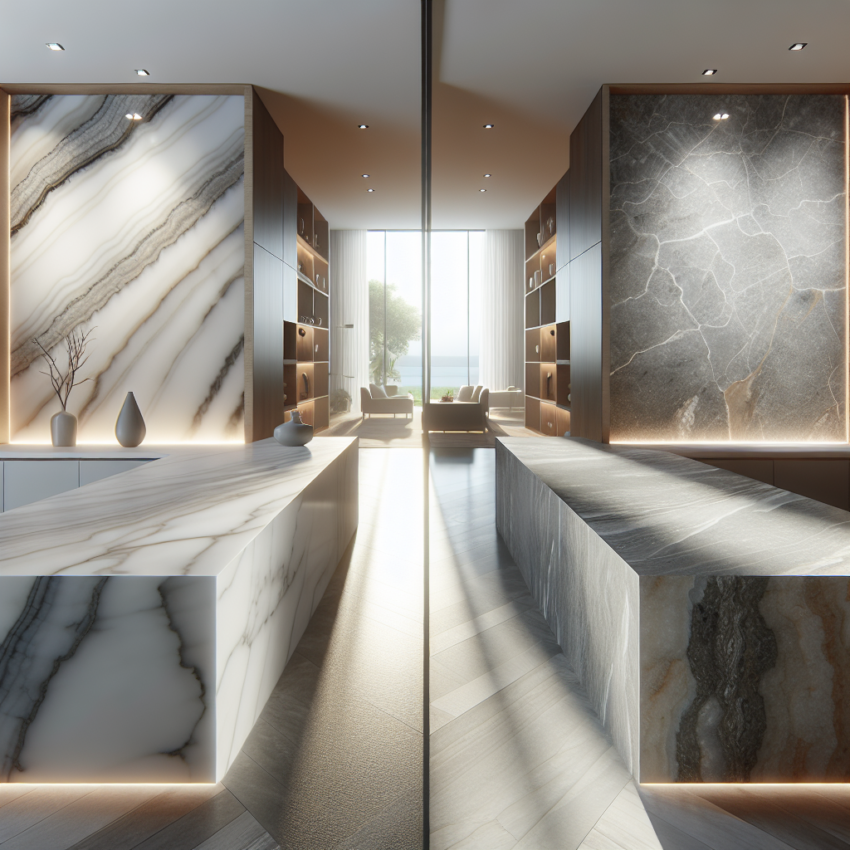
Choosing the right material for your home surfaces can be a daunting task, especially when deciding between quartz vs quartzite. Both options offer unique benefits and beautiful aesthetics, but understanding their differences is key to making an informed decision. In this article, we will explore what sets these stones apart and which might be the best fit for various areas in your home.
Quartz vs Quartzite: What You Need to Know
When comparing quartz vs quartzite, it’s essential to understand that the primary difference lies in their composition and formation. Quartzite is a natural stone, formed when sandstone is subjected to intense heat and pressure under the earth’s crust. This process results in a dense, hard stone that is highly durable and resistant to scratching.
In contrast, quartz countertops are engineered stones made from a combination of natural quartz crystals and synthetic materials like resins and pigments. This gives quartz a more uniform appearance and allows for a wide variety of colors and patterns that aren’t found in natural stone.
Durability and Maintenance
One of the most significant factors homeowners consider when choosing between quartz and quartzite is durability. Both materials are incredibly tough, but quartzite is often regarded as more robust because of its natural formation process. It is ideal for high-traffic areas in the home, such as kitchens and bathrooms, where surfaces are prone to damage.
Quartz, while also durable, may not be as heat resistant as quartzite. However, it excels in stain resistance since the engineered surface does not have the pores found in natural stone. This makes it easier to keep clean with simple household cleaners and a regular wiping routine.
Visual Appeal and Versatility
When it comes to aesthetics, quartzite often offers the classic, natural beauty of stone with unique veining and color variations that add character to any space. It’s perfect for achieving a sophisticated look that evokes the patterns found in nature.
Quartz, on the other hand, can present a more consistent design, as the manufacturing process allows for greater control over color and pattern uniformity. This makes it a popular choice for those looking for modern or minimalist styles. Additionally, quartz can closely mimic other materials, offering a versatile option for various design preferences.
Cost Considerations
The price of quartz vs quartzite can vary significantly, depending on the quality, rarity of the stone, and the location where it is sourced. Typically, quartzite tends to be more expensive due to the extraction and craftsmanship involved in transforming the natural stone into slabs.
Quartz may offer more affordable options without sacrificing aesthetic appeal, making it a great choice for budget-conscious homeowners. Its ease of installation can also result in lower labor costs compared to natural stone.
Environmental and Health Impacts
For those concerned with the environmental impact of their home materials, both quartz and quartzite have considerations. Quartzite is a fully natural material, meaning its production has minimal impact on the environment. However, quarrying practices can vary, and it is crucial to source stone from ethical and sustainable suppliers.
Quartz, while manufactured, can also be environmentally friendly depending on the production process and manufacturers’ commitment to sustainable practices. Opt for producers who use recycled materials and have low-impact manufacturing facilities to reduce your carbon footprint.
For additional insights into sustainable home choices, consider exploring ways to incorporate eco-friendly practices throughout your home design.
Making Your Decision
Ultimately, deciding between quartz vs quartzite depends on your specific needs and preferences. Consider your lifestyle, budget, and design goals. If you’re drawn to the natural look and durability of stone, quartzite might be the right choice. If you prefer a customizable, budget-friendly option with minimal maintenance, quartz could be ideal.
For further detailed information on different materials and their benefits, read more here.
- Quartzite is a natural stone known for its durability and unique patterns.
- Quartz is an engineered stone offering a wide range of colors and ease of maintenance.
- Consider factors like heat resistance, stain resistance, and cost when choosing.
- Both materials have environmental impacts, so choose sustainable sources when possible.
- Balance your design goals with practical needs to find the perfect fit for your home.
What are the primary differences between quartz and quartzite?
Quartzite is a natural stone formed from sandstone under heat and pressure, while quartz is an engineered stone made from quartz crystals, resins, and pigments.
Which is more durable: quartz or quartzite?
While both materials are durable, quartzite is often considered more robust due to its natural formation process, making it ideal for high-traffic areas.
Is quartz more affordable than quartzite?
Generally, quartz tends to be more budget-friendly due to available options and ease of installation compared to the natural stone extraction of quartzite.
How does maintenance differ between quartz and quartzite surfaces?
Quartz offers excellent stain resistance and requires minimal maintenance, while quartzite may need regular sealing to maintain its appearance and resist stains.
Is one material more environmentally friendly than the other?
Both materials have environmental impacts. It’s essential to choose sustainable sources and manufacturers to minimize your home’s carbon footprint.