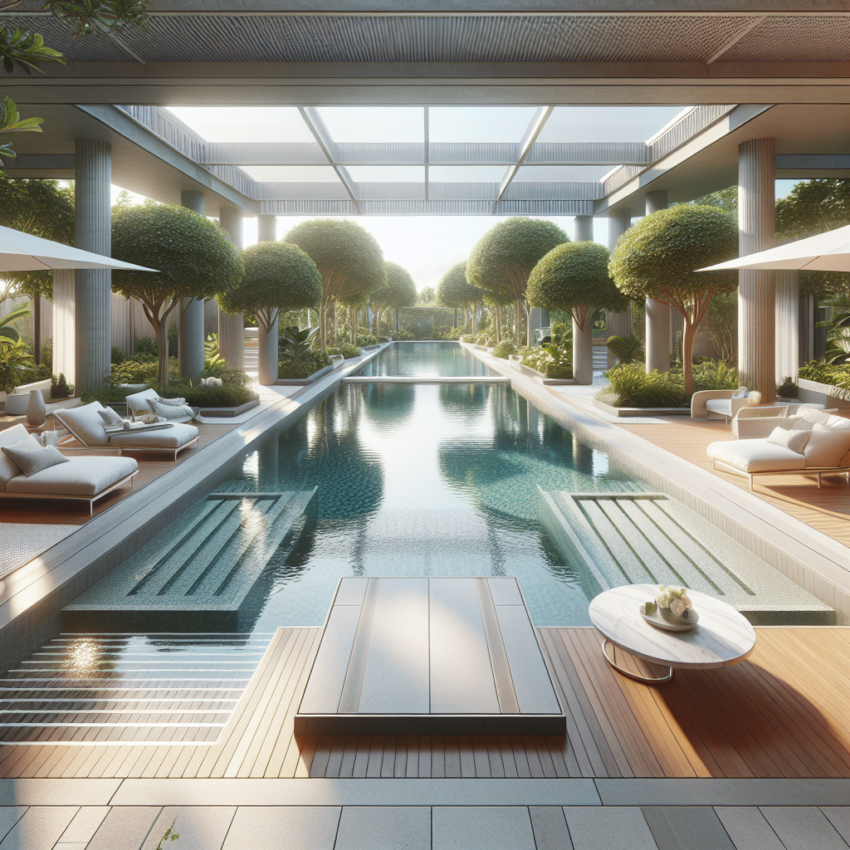
Creating the perfect pool deck is essential for transforming your backyard into a personal oasis. Designing a pool deck involves considering materials, safety, and aesthetics to provide a functional yet beautiful space. Whether you prioritize style, durability, or cost-effectiveness, this guide helps navigate choices to enhance your outdoor experience.
Choosing the Right Materials for Your Pool Deck
When selecting materials for your pool deck, consider factors such as maintenance, slip resistance, and color retention. Popular options include concrete, natural stone, wood, and composite decking. Each material offers unique benefits and drawbacks, so understanding them is crucial for making an informed decision.
Concrete Pool Decks
Concrete is a versatile option for pool decks, providing a durable and cost-effective surface. It can be stamped, brushed, or stained for various aesthetic finishes. Concrete requires sealing to prevent water damage and staining, but it’s an excellent choice for those seeking customization.
Natural Stone
For a timeless and elegant look, natural stone such as travertine, limestone, or sandstone can be used for pool decks. These materials are slip-resistant and remain cool underfoot. Though they may have a higher upfront cost, the long-term durability and aesthetic appeal are well worth the investment.
Wood and Composite Decking
Wooden pool decks offer a warm and natural appearance, but they require routine maintenance and sealing to protect against moisture and rot. Alternatively, composite decking is a low-maintenance option made from recycled materials, which withstands weathering and is available in wood-like finishes.
Design Elements to Enhance Your Pool Deck
Incorporating thoughtful design elements into your pool deck can elevate its functionality and ambiance. Consider integrating features such as built-in seating, planters, or fire pits to create a cohesive outdoor environment.
Built-In Seating and Shade Structures
Built-in seating provides convenient lounging areas without the need for additional furniture. Integrating shade structures like pergolas or canopies enhances comfort and maximizes the usability of your pool deck throughout the day.
Lighting and Accent Features
Strategically placed lighting can highlight landscaping and illuminate pathways for safety during evening use. Accent features such as waterfalls or sculptures add a touch of luxury to your pool deck design.
Safety Considerations for Your Pool Deck
Pool deck safety is paramount for protecting your family and guests. Slip-resistant surfaces, proper drainage, and secure fencing around the pool area should be prioritized. It’s essential to check local regulations and adhere to recommended safety standards to ensure a safe and enjoyable space.
Drainage Solutions
Effective drainage prevents water accumulation, reducing slip hazards and preventing damage to your pool deck. Ensure that your design includes adequate slopes and drainage systems to manage runoff.
Pool Fencing
Installing a pool fence is a critical safety feature that provides a barrier to prevent unsupervised access, particularly for young children. Choose materials that complement your deck’s aesthetic while prioritizing security and durability.
Maintaining Your Pool Deck
Regular maintenance of your pool deck ensures longevity and preserves its appearance. Depending on the material, this could include power washing, sealing, or staining. By scheduling routine maintenance, you can protect your investment and enjoy your outdoor space for years to come.
For those considering a renovation, it may be helpful to learn about the costs associated with resurfacing outdoor surfaces, as similar principles apply to pool deck refurbishments.
In conclusion, the perfect pool deck combines functionality with aesthetic appeal, creating an inviting space for relaxation and entertainment. Whether investing in high-end materials or focusing on thoughtful design elements, your pool deck can become the centerpiece of enjoyable outdoor living.
- Choose materials based on durability and aesthetic needs.
- Incorporate elements like lighting and seating for enhanced comfort.
- Prioritize safety with slip-resistant surfaces and proper fencing.
- Maintain your deck to protect its appearance and functionality.
- Design with drainage in mind to prevent water-related issues.
What are the most durable materials for a pool deck?
Concrete and natural stone are among the most durable materials for a pool deck, offering longevity and resistance to wear.
How often should I seal my pool deck?
The frequency of sealing depends on the material; typically, concrete and wood decks need sealing every 2–3 years, while composite decks require little to no sealing.
Are there eco-friendly options for pool deck materials?
Yes, composite decking made from recycled plastics is eco-friendly, offering sustainability and reduced environmental impact.
What is the best way to clean a pool deck?
Regular cleaning with a mild detergent and power washing for stubborn grime is recommended for most pool deck materials.
Where can I learn more about outdoor safety standards?
For comprehensive resources, visit trusted sites like the World Health Organization or other authorities on public safety standards.