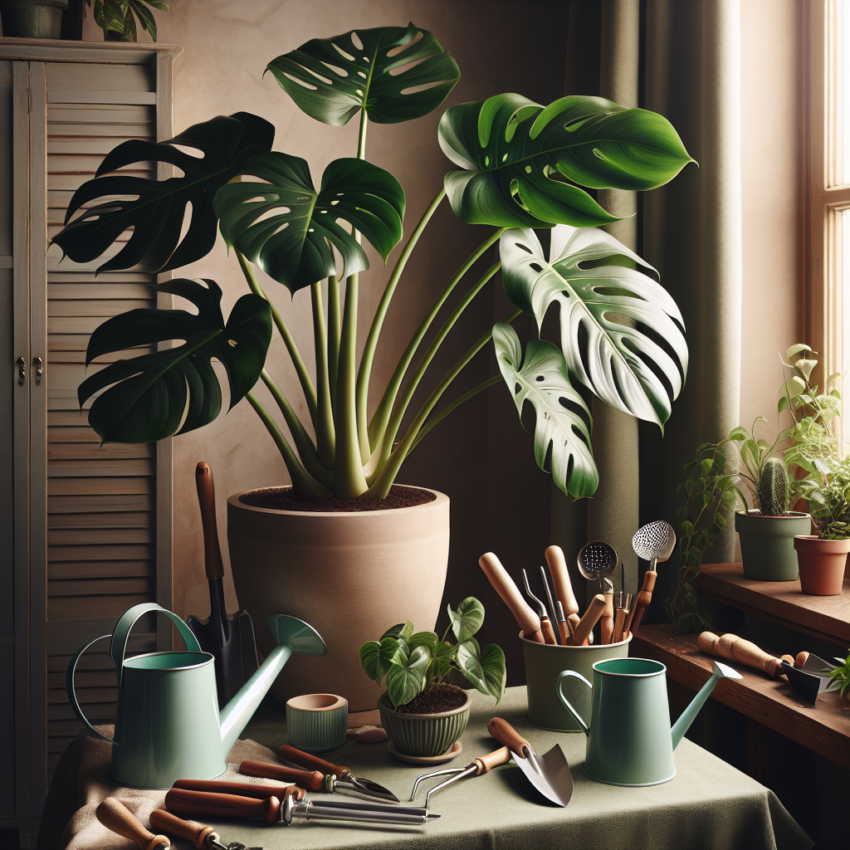
Looking to enhance your indoor greenery with a vibrant touch? Learning the art of monstera plant care can transform your home environment with this stunning tropical plant. Monsteras, also known as Swiss Cheese Plants, are admired for their distinctive fenestrated leaves and can be a lovely addition to any home. This article will guide you through the essentials, ensuring your monstera thrives and becomes a focal point in your living space.
Understanding Monstera Plant Care
Monstera plants naturally come from tropical rainforests, which means they thrive in environments that mirror these conditions. When caring for your monstera, it’s crucial to consider factors that mimic its natural habitat, including light, water, humidity, and soil.
Light Requirements
Monsteras do best in bright, indirect sunlight. Direct sunlight can scorch the leaves, while too little light will slow their growth and reduce the characteristic holes and splits in the leaves. Choosing the right spot in your home is key for successful monstera plant care. Avoid placing your plant in direct sunlight by situating it near a north or east-facing window, where it can receive filtered light.
Watering and Humidity Needs
Monsteras prefer to be consistently moist but not soggy. Water your monstera when the top inch of soil feels dry, ensuring excess water drains out to prevent root rot. As tropical plants, they thrive in higher humidity, so consider misting your plant or using a humidity tray, especially if you live in a dry climate.
Choosing the Right Soil and Pot
The right soil is essential for healthy monstera growth. A peat-based, well-draining potting mix is ideal, or you can create your own mix using peat moss, perlite, and pine bark. Ensure that your pot has adequate drainage holes to allow excess water to escape.
Fertilization Practices
While monsteras are not heavy feeders, they do benefit from monthly feeding during the growing season (spring and summer). A balanced, water-soluble fertilizer at half-strength can promote lush growth. Always follow the instructions on your fertilizer packaging and reduce feeding during fall and winter, when plant growth typically slows.
Propagation Techniques
Propagating your monstera can be a rewarding process. The most common methods of propagation are stem cuttings and air layering. Each technique provides an opportunity to expand your collection or share with friends.
Stem Cuttings
To propagate a monstera from stem cuttings, you’ll need a healthy stem with at least one node. Cut the stem just below a node, and place the cutting in water or directly into moist soil. If you’re using water, watch for roots to develop before transferring the cutting to soil. Keep it warm and well-lit, but out of direct sunlight.
Air Layering
Air layering is a bit more complicated but can be more successful. This involves wrapping a small section of the stem with moist sphagnum moss and plastic wrap. Roots will grow into the moss, at which point you can trim the stem and pot your new plant.
Common Issues and Solutions
Monstera plants are quite hardy, but like any plant, they can be susceptible to certain problems. Some common issues include yellowing leaves, brown tips, and pests like spider mites or scale insects.
Yellow Leaves
Yellow leaves can be a sign of overwatering or lack of nutrients. Check your plant’s watering schedule and soil condition. Adjusting these factors may bring your monstera back to health.
Brown Tips
Brown tips are often the result of low humidity or underwatering. Increasing humidity and ensuring your monstera receives adequate water should resolve this issue.
Pests
Keep an eye out for any pests. Treat them by wiping leaves with a mixture of water and mild soap or by applying Neem oil, ensuring to clean both sides of the leaves.
Whether you’re new to houseplants or an experienced gardener, mastering monstera plant care enhances your home’s ambiance with these stunning tropical creatures. For additional home decor ideas, consider incorporating vintage maps to create a timeless aesthetic.
- Monsteras prefer bright, indirect sunlight.
- Keep soil moist but ensure proper drainage.
- High humidity is beneficial; consider misting regularly.
- Fertilize during the growing season for lush foliage.
- Propagate through stem cuttings or air layering.
FAQ
How often should I water my monstera plant?
Water your monstera when the top inch of soil feels dry. This typically means watering once a week, but it can vary depending on your home’s climate and the season.
Why are my monstera leaves turning yellow?
Yellow leaves may indicate overwatering or possibly a nutrient deficiency. Adjust your watering schedule and check that your pot provides adequate drainage.
Can I propagate my monstera plant?
Yes, you can propagate monstera plants using stem cuttings or air layering techniques. Both methods are effective and allow you to share the beauty of monsteras with others.
What type of soil is best for monstera plants?
A well-draining, peat-based potting mix is ideal. You can also use a blend of peat moss, perlite, and pine bark to create a suitable environment for your monstera.
Do monsteras like direct sunlight?
Monstera plants prefer bright, indirect sunlight. Direct sunlight may cause the leaves to scorch. Position your plant where it can enjoy diffused light, such as near a north or east-facing window.
For further information on general plant care, you may find this article on Houseplant Care useful.