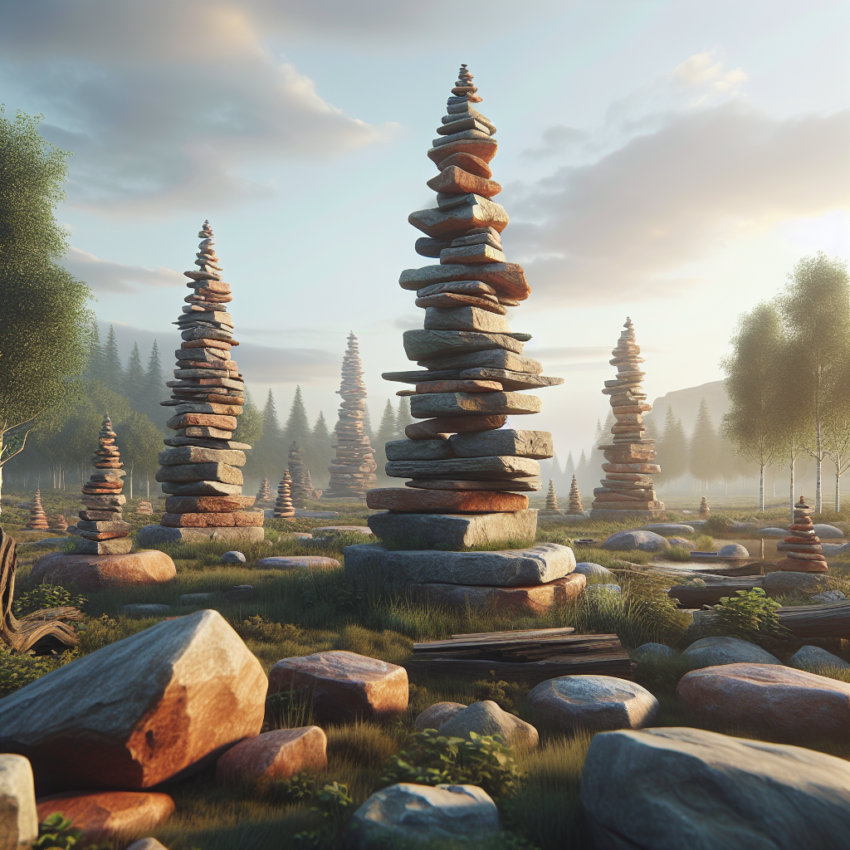
Walking through nature, you may have come across stacks of rocks, carefully balanced one on top of another. This simple yet intriguing arrangement, often referred to as rock stacking, captivates many who encounter it. Widely practiced and admired, this art form involves placing rocks on top of rocks in creative and often meditative ways. Whether encountered on a hiking trail or along a calm riverbed, these formations stir a sense of curiosity and reflection.
The Art and Science of Rocks on Top of Rocks
Rock stacking is more than just a pastime; it blends physical skill with an artistic touch and often spiritual undertones. Practitioners carefully select and place stones to create balanced stacks, which can be both transient and serene. While balance and gravity are the primary forces at work, creativity plays an essential role. Each stack becomes a unique expression of the landscaper’s interaction with the natural world.
One of the intriguing aspects of this practice is its meditative quality. Like yoga or meditation, stacking rocks on top of rocks can serve as a form of mindfulness exercise. By focusing attention meticulously on the task at hand, individuals often find a tranquil escape from the rush of modern life.
The Benefits of Rock Stacking
Engaging in rock stacking offers several benefits. From physical exercise to mental well-being, it provides a holistic experience:
- Physical Engagement: Selecting and balancing stones requires fine motor skills and strength, providing a subtle workout.
- Mental Clarity: The meditative aspect promotes mindfulness, reduces stress, and can help in achieving mental clarity.
- Creative Expression: Each arrangement is a unique work of art, allowing personal expression and creativity.
Individuals often report a greater sense of calm and focus after engaging in this practice. For more on how mindfulness impacts health, [explore this detailed study by Harvard University](https://en.wikipedia.org/wiki/Mindfulness). This source provides insight into the broader applications of mindfulness practices.
Exploring the Practical and Spiritual Aspects
Rock stacking is as much a spiritual journey as it is an art form. Many practitioners engage in stacking as a way to connect more deeply with nature. The process allows participants to tune into the rhythm of their surroundings and revel in the stillness of the moment.
This practice also symbolizes the delicate balance of life, teaching patience and persistence. When a stack falls, it reminds one to try again, embodying perseverance and resilience. These lessons translate to everyday life, where balance and patience are continual pursuits.
Rock Stacking and Community Building
Beyond personal benefits, rock stacking can forge connections with fellow enthusiasts. Communities have arisen around this art, with enthusiasts sharing tips, experiences, and encouragement. Stacking events and festivals celebrate this unique art, fostering a collective camaraderie. For those interested in related wellness practices, this [article on surprising supplements for brain recovery](https://prblogs.org/7-surprising-supplements-for-brain-injury-recovery/) offers valuable insights.
Importantly, such gatherings emphasize respect for the environment. Enthusiasts advocate for leaving no trace, ensuring that these serene landscapes remain undisturbed by human activity.
Considerations and Ethics in Rock Stacking
The increasing popularity of rock stacking has prompted discussions about environmental impact. Some argue that moving rocks disrupts ecosystems, affecting habitats for creatures like insects and small plants. Such concerns underscore the importance of practicing this art responsibly. Enthusiasts suggest returning rocks to their natural state after an impromptu installation to minimize environmental disruption.
Conclusion: The Art of Balancing Life with Rocks on Top of Rocks
Rock stacking offers a profound yet simple way to engage with nature, unlock creativity, and find balance. By stacking rocks on top of rocks, one participates in a meditative practice that soothes the mind and nurtures the spirit. As with any art form that interacts with the environment, it is vital to approach it with a sense of stewardship and respect for nature.
- Rock stacking combines art and mindfulness.
- The practice enhances physical and mental well-being.
- Community and environmental considerations are key.
- Engaging responsibly ensures ecological balance.
- Embrace rock stacking as a personal, creative journey.
FAQ
What are some benefits of rock stacking?
Rock stacking provides mental clarity, a creative outlet, and subtle physical exercise, promoting overall well-being.
Is rock stacking harmful to the environment?
It can disrupt ecosystems if practiced irresponsibly. It’s important to stack rocks in a way that minimizes environmental impact.
How can rock stacking improve mindfulness?
The focused nature of balancing rocks promotes meditation-like mindfulness, reducing stress and enhancing mental clarity.
Can rock stacking enhance creativity?
Yes, it allows individuals to express their artistic side by creating unique stone arrangements.
Is there a community for rock stacking enthusiasts?
Yes, rock stacking communities exist both online and at events, where enthusiasts share experiences and techniques.