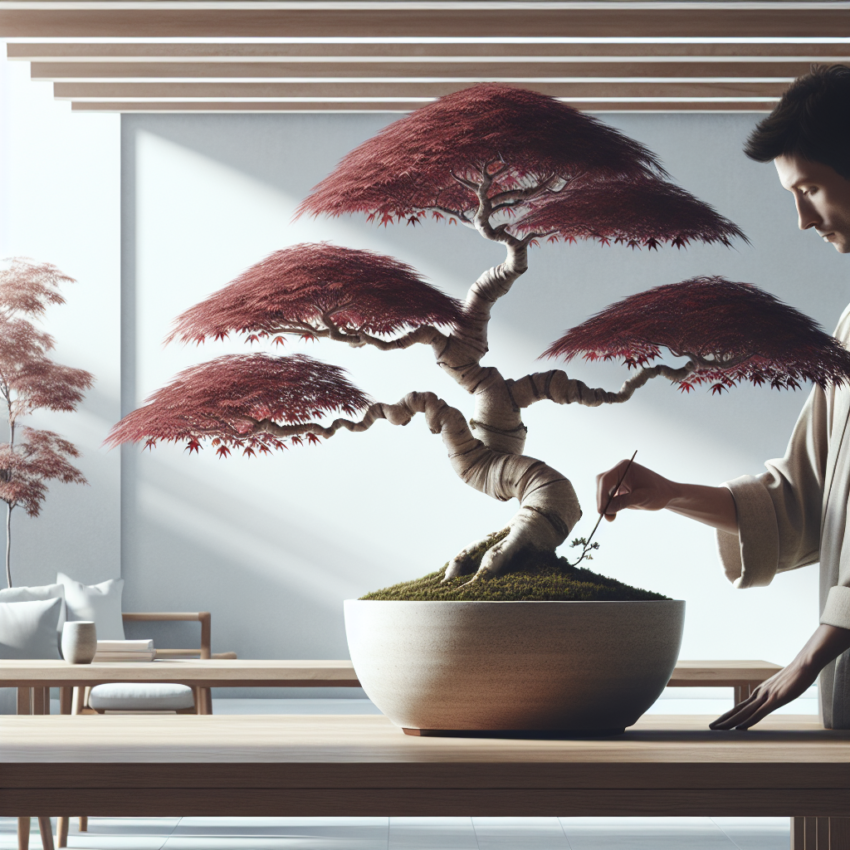
The Japanese maple bonsai offers a captivating way to bring the ancient art of bonsai into your home and garden. Renowned for its delicate leaves and vibrant fall colors, the Japanese maple bonsai tree can transform any space into a serene, natural retreat. Whether you’re a seasoned bonsai enthusiast or a beginner looking to delve into this traditional practice, understanding the unique characteristics of these trees is vital for their successful cultivation and maintenance.
Cultivating Your Japanese Maple Bonsai
Creating a Japanese maple bonsai requires patience, dedication, and a keen eye for detail. The journey begins with selecting the right tree. Japanese maples are favored for bonsai because of their small leaves, beautiful colors, and graceful forms. When choosing your tree, look for a healthy specimen with a robust trunk and interesting branch structure.
Once you’ve selected your tree, it’s time to consider the soil and pot selection. Bonsai trees thrive in a well-draining soil mixture, typically composed of akadama, pumice, and lava rock. The pot should complement the tree’s aesthetic and provide sufficient room for root growth without overwhelming the tree’s balanced proportions.
Pruning and Shaping Techniques
Pruning is essential to maintaining the desired shape and health of your Japanese maple bonsai. Regularly prune with shears to maintain the tree’s shape and encourage fine branching. Wiring is another crucial technique, allowing you to coax branches into specific positions.
It’s important to approach wiring with caution. Wrap the wire around the branches gently to avoid damaging the bark. Start with the thicker branches and gradually work your way to the finer ones. Keeping an eye on the wired branches is essential to prevent the wire from cutting into the bark as the tree grows.
Watering and Fertilizing
Proper watering is crucial to the health of your Japanese maple bonsai tree. The soil should be kept consistently moist, but not waterlogged. A balanced watering schedule that adjusts for seasonal changes ensures the tree remains healthy.
Fertilizing is equally important, providing the necessary nutrients for growth and health. During the growing season, use a balanced bonsai fertilizer every few weeks to promote lush foliage and strong roots. Reducing or even completely ceasing fertilization during the dormant winter months is recommended.
Seasonal Care and Environmental Needs
The Japanese maple bonsai thrives when given the right environmental conditions. These trees prefer bright, indirect sunlight, especially in the warmer months. Protecting them from harsh, direct summer sunlight helps prevent leaf scorch.
During winter, it’s crucial to shield the tree from freezing temperatures. Bringing the bonsai indoors, placing it in a cool, bright spot, or utilizing a greenhouse are effective strategies. Ensuring adequate humidity indoors is also vital to prevent desiccation.
Common Pests and Diseases
Though Japanese maple bonsai trees are generally hardy, they can fall victim to pests and diseases. Watch for common pests like aphids, spider mites, and scale. Regular inspection and appropriate treatment with insecticidal soap can effectively manage these pests.
Fungal infections, such as powdery mildew, can also affect these trees. Ensuring good air circulation and avoiding over-watering can help prevent these diseases. If an infection does occur, removing affected foliage and applying a fungicide can help alleviate the problem.
For those interested in enhancing their home décor, considering the integration of a Japanese maple bonsai alongside other unique home elements can be an excellent decision. One might even explore decorating with vintage maps for a timeless and cohesive aesthetic that complements the natural elegance of bonsai.
For more detailed information about specific practices and history related to Japanese maples, check out this comprehensive article on Wikipedia.
Mastering the art of Japanese maple bonsai requires time and practice, but the rewards of nurturing and shaping these breathtaking trees are well worth the effort. Whether you’re enhancing your garden or bringing a piece of tranquility into your home, understanding the needs and care of your bonsai is key to its longevity and beauty.
- Japanese maple bonsai is favored for its beauty and elegance.
- Proper pruning and wiring help maintain the tree’s shape.
- Consistent watering and seasonal care are crucial for health.
- Protect bonsai from pests with regular inspection and treatment.
- Decorate with bonsai for a serene home or garden atmosphere.
What soil is best for a Japanese maple bonsai?
A mix of akadama, pumice, and lava rock provides excellent drainage and nutrient balance for Japanese maple bonsai.
How often should I water my Japanese maple bonsai?
Water your bonsai when the soil begins to feel slightly dry but avoid letting it fully dry out. Adjust watering with the seasons.
Can I keep my Japanese maple bonsai indoors all year?
While they can be kept indoors, Japanese maple bonsai require outdoor time during the growing season for proper sunlight and air circulation.
How do I protect my bonsai from pests?
Regularly inspect your bonsai for pests and use insecticidal soap if needed. Promote good airflow to deter pests naturally.
When is the best time for pruning a Japanese maple bonsai?
Prune during the dormancy period in late winter to early spring when the tree’s energy is focused on root rather than leaf growth.