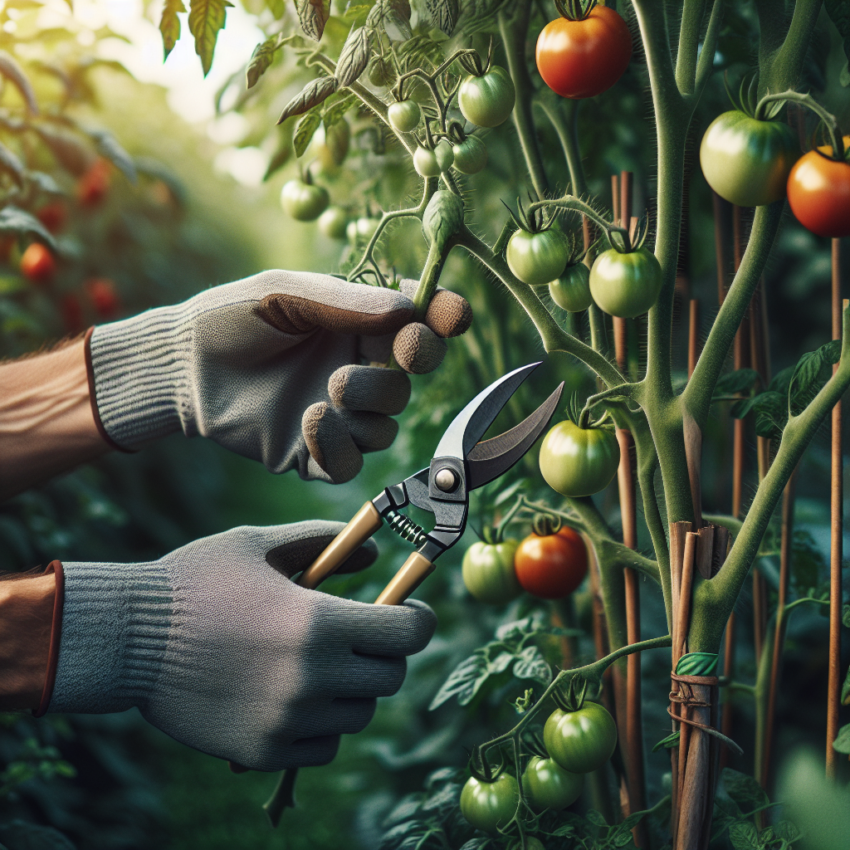
Pruning tomato plants is an essential gardening task that can significantly impact your harvest. Knowing how to prune tomato plants effectively will not only improve plant health but also increase fruit production. Whether you’re a novice gardener or have years of experience, mastering this skill is crucial for achieving a bountiful tomato yield.
Benefits of Pruning Tomato Plants
Pruning is more than just a maintenance activity; it’s a strategic move to foster healthier and more productive tomato plants. When you prune tomato plants, you remove unnecessary growth that consumes energy, directing more nutrients towards fruit production. This results in higher quality fruit and potentially larger yields.
Promotes Air Circulation
Removing excess foliage helps increase air circulation around the plant. Good airflow reduces humidity around the leaves, minimizing the risk of fungal diseases that thrive in moist environments.
Improves Sun Exposure
Tomato plants need adequate sunlight to produce sugars that fuel fruit growth. Pruning helps ensure that more leaves and fruit receive direct sunlight, especially important in crowded garden spaces.
How to Prune Tomato Plants
To prune tomato plants effectively, start with high-quality shears or scissors to avoid tearing the plant tissues. Here are steps to guide you:
1. Identify the Suckers
Suckers are small shoots that grow from where the leaf stem meets the main stem. These should be removed to focus growth on the main stems and fruit production.
2. Use Proper Technique
Gently pinch or snip suckers when they are small, about two to four inches. Larger suckers can be cut with sanitized pruning shears to prevent disease spread.
3. Remove Excess Foliage
Trimming lower leaves and foliage that appear yellow or diseased is crucial. Knowing how to trim tomato plants also means thinning out foliage that casts excessive shade on the plant’s fruit.
4. Stay Consistent
Pruning is an ongoing process. Regularly check your tomato plants, ideally weekly, to manage new growth and ensure the plant remains healthy and productive.
When to Prune Tomato Plants
Timing is critical in pruning. Begin once the plant is firmly established, typically when it reaches 12-18 inches in height. This enhances structural integrity and fruiting potential. Pruning too early or aggressively can hinder growth, so it’s essential to strike the right balance.
Indeterminate vs. Determinate Varieties
Understanding your tomato plant variety is crucial as it influences pruning strategy. Indeterminate tomatoes benefit from regular pruning throughout the growing season. In contrast, determinate varieties require minimal pruning since they bear fruit over a shorter period.
Complementary Gardening Tips
Alongside pruning, consider installing an efficient irrigation system to optimize water usage and improve plant health.
Support Structures
As your tomato plants grow, providing support such as cages or stakes is essential. This prevents the stems from breaking under the weight of the fruit and helps maintain an organized garden space.
Mulching Benefits
Using mulch around the base of your plants retains moisture, suppresses weeds, and enhances nutrient availability, further supporting plant growth and fruit production.
Conclusion
Knowing how to prune tomato plants can seem daunting at first, but with practice, it becomes an intuitive process that enhances the health and output of your tomato plants. Regular monitoring and care, paired with strategic pruning, can lead to a thriving tomato garden.
- Pruning is essential for maximizing tomato yield.
- Identify and remove suckers to focus growth.
- Prune consistently throughout the growing season.
- Support structures and mulching complement pruning efforts.
- Determine the variety of your tomato plant for targeted care.
Frequently Asked Questions
What tools do I need for pruning?
Basic gardening tools like pruners or scissors are sufficient. Ensure they are sharp and clean to prevent disease spread.
Can I prune all types of tomato plants the same way?
No, determinate and indeterminate tomato plants have different pruning needs. Understand your plant type to apply the appropriate technique.
When is the best time to start pruning?
Begin pruning when your tomato plants are about one to two feet tall and actively growing.
Does pruning affect tomato taste?
Proper pruning directs energy to fruit development, potentially enhancing flavor by concentrating the plant’s resources.
Where can I find more detailed information on plant health?
For more guidance on plant health and best gardening practices, visit Wikipedia’s agriculture resource.