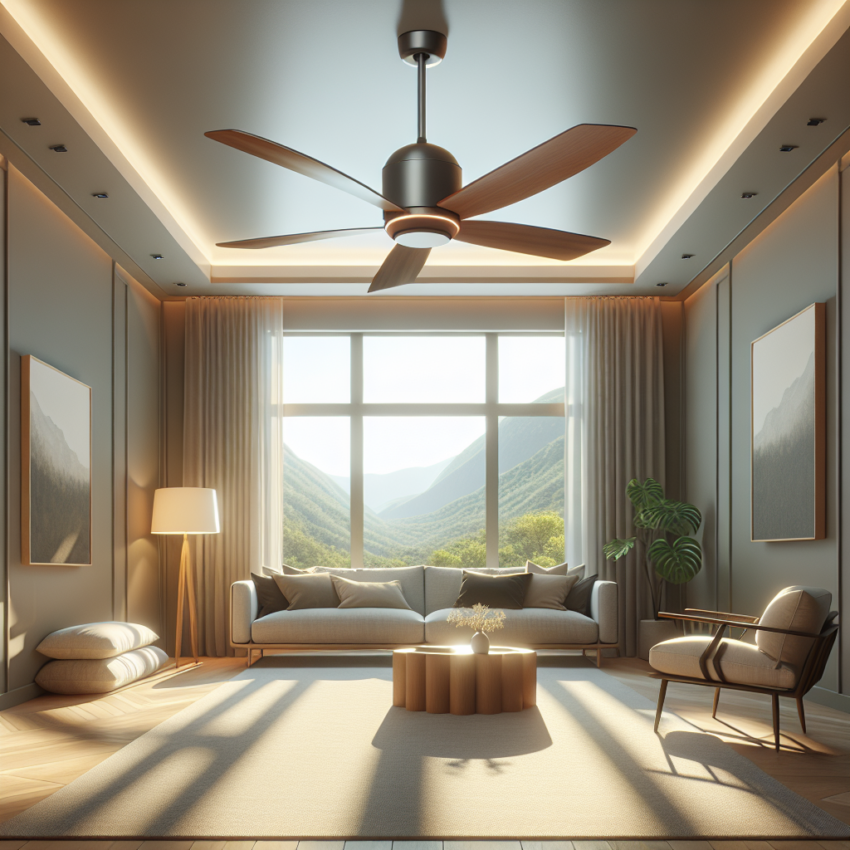
As temperatures rise, optimizing your ceiling fan direction can maximize comfort in your home. Many people overlook this simple yet effective way to enhance their cooling strategies during the summer months. By understanding the mechanics of how a ceiling fan should operate in the summertime, you can potentially reduce your reliance on air conditioning and lower energy costs.
How to Adjust Ceiling Fan Direction for Summer
First, let’s delve into the science behind the ideal ceiling fan direction for summer. When set correctly, your fan can create a cool breeze that makes the room feel more comfortable, even at higher temperatures. For summertime comfort, ceiling fans should rotate counter-clockwise. This direction creates a wind-chill effect as the blades push cooler air down into the room.
To adjust your ceiling fan, locate the small switch on the motor housing. Not all fans are the same, so check your fan’s manual if unsure. Once adjusted, you should immediately feel a difference in air circulation and comfort level.
Why Ceiling Fan Direction Matters
The primary reason to adjust your ceiling fan’s direction is to optimize energy efficiency. Using fans strategically can decrease your dependence on air conditioning. When you set the correct ceiling fan direction, the cost of cooling your home is reduced, as fans use far less electricity than air conditioning units.
By setting your fan to a counter-clockwise direction, you can lower the perceived temperature by a few degrees, allowing you to set your thermostat higher without sacrificing comfort.
Additional Tips for Summer Comfort
While adjusting your ceiling fan’s direction is essential, there are other ways to improve your home’s comfort in the summer. Consider using blinds or curtains to block out heat during the hottest parts of the day. Additionally, ensuring proper insulation can prevent cool air from escaping.
If you’re interested in interior design, you might want to explore additional ways to enhance your space. For instance, decorating your home with vintage maps can add a unique and personal touch, complementing the cool, airy atmosphere you create with your fan.
Efficient Fan Use: Know When to Turn Off
Despite their benefits, remember that fans cool people, not rooms. Thus, turning off fans when leaving a room can save energy. This mindful practice ensures that you’re using your ceiling fans as efficiently as possible, complementing their correct summer setting.
Understanding the balance between air conditioning and ceiling fan use can make a significant impact on your energy bills and environmental footprint.
Further Reading and Resources
For more detailed insights on energy-efficient home practices and the science behind fan operation, resources like Wikipedia can offer comprehensive information. Staying informed helps you make the best choices for both comfort and sustainability in your home.
Conclusion
By mastering the correct ceiling fan direction for the summer months, you can enjoy a cooler, more comfortable home while being energy-efficient. As temperatures soar, utilizing these methods can significantly enhance indoor comfort without relying solely on air conditioning.
- Set ceiling fans to rotate counter-clockwise in summer.
- Fans use less energy than air conditioners.
- Efficient fan use can lower energy bills.
- Blinds and insulation complement fan use by keeping heat out.
- Turn fans off when not in use to maximize energy efficiency.
How do I know if my ceiling fan is turning in the right direction?
Stand directly under the fan while it’s running. If you feel a cool breeze, it’s rotating correctly for summer (counter-clockwise). If not, adjust the direction using the fan’s switch.
Can using a ceiling fan reduce my energy bills?
Yes, ceiling fans require less electricity than air conditioning units. By using fans strategically, you can increase the thermostat setting while maintaining comfort, leading to energy savings.
Will my ceiling fan make a room cooler?
While ceiling fans do not lower the air temperature, they create a wind-chill effect that can make the room feel cooler to the occupants.
Can I use outdoor fans the same way?
Using outdoor fans correctly can improve comfort by enhancing airflow. Ensure they are set to rotate counter-clockwise to achieve the most comfortable effect during summer.
Are there specific types of fans best for energy efficiency?
Choose fans with Energy Star ratings for better energy efficiency. More efficient models consume less power while providing effective air circulation.