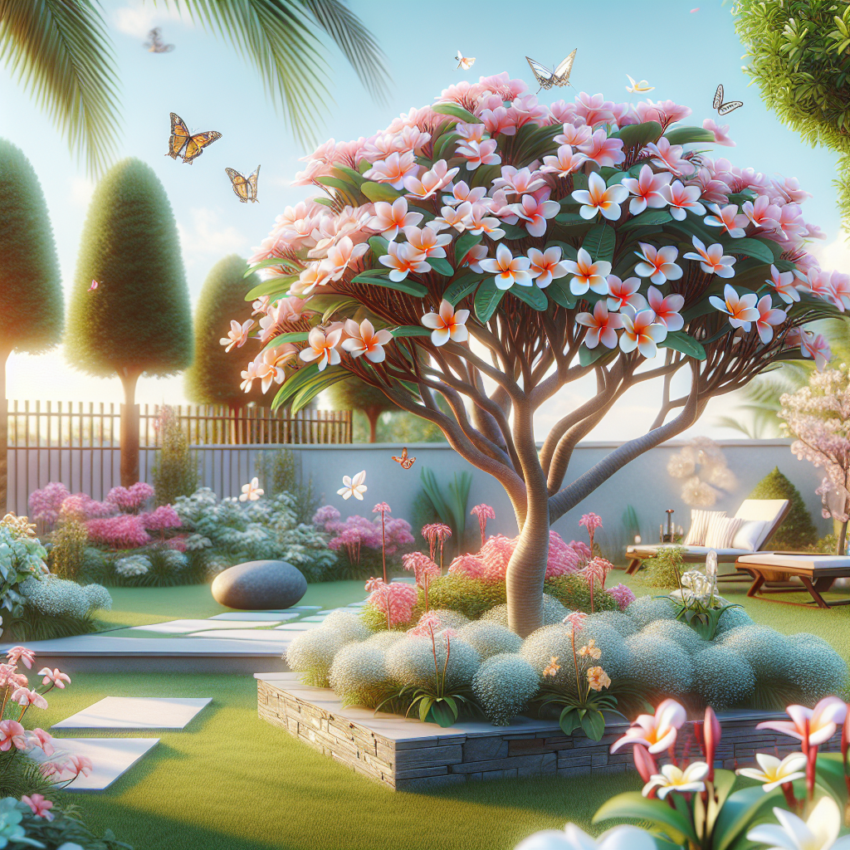
The plumeria tree, renowned for its stunning, fragrant blooms and ease of cultivation, is a beloved choice for many garden enthusiasts. Known for its vibrant flowers and beautiful scent, the plumeria is an excellent addition to any garden setting. This tropical delight not only enhances the visual appeal of your outdoor space but might also contribute to a soothing and relaxing environment.
Why Grow a Plumeria Tree?
There are several compelling reasons to cultivate a plumeria tree in your garden. First and foremost, these trees are appreciated for their vibrant and fragrant blooms, which can transform any outdoor space into a tropical paradise. Plumeria flowers come in a variety of colors, including vivid pinks, yellows, and whites, offering diversity in your landscape’s aesthetic.
Aside from their visual appeal, plumeria trees are known for their easy maintenance. They thrive in warm, sunny climates and do not require complex care routines, making them ideal for both experienced gardeners and novices alike. Additionally, plumerias can be a beautiful means of attracting pollinators such as bees and butterflies, which further enhances the ecological health of your garden.
Planting and Caring for Your Plumeria Tree
When planting a plumeria tree, choose a location that receives plenty of sunlight, as these trees flourish in bright environments. It’s essential to plant them in well-draining soil to prevent root rot. Regular watering is beneficial, especially during dry periods, but make sure not to overwater as plumerias are drought-tolerant.
For more information on effective watering techniques, you may refer to this guide on irrigation systems installation. It provides insights into how to manage water delivery to your plants efficiently.
Fertilizing your plumeria tree is another crucial aspect of its care. Use a fertilizer high in phosphorus content to encourage flowering. Apply the fertilizer regularly during the growing season, typically from spring through summer, to ensure your trees grow vigorously.
Potential Benefits of Plumeria Trees
The plumeria tree is not only appreciated for its aesthetic qualities but also for the potential benefits it may offer. Some studies suggest that certain compounds in the plumeria may have soothing properties and could support relaxation. Of course, further scientific examination is necessary, and these benefits should be considered informational rather than definitive.
Additionally, the enticing scent of plumeria flowers can help in creating a calming and serene atmosphere in your garden, promoting overall well-being and tranquility. The vibrant colors and lovely fragrance also make them ideal for use in decorative arrangements and traditional leis.
Common Issues and Troubleshooting
While plumeria trees are generally easy to care for, they can occasionally encounter pests and diseases. Common pests such as aphids and spider mites may target these trees, but they can typically be managed with regular inspection and the application of insecticidal soap or neem oil.
Fungal issues such as powdery mildew can also occur, especially in humid environments. Ensuring good air circulation around your plants and avoiding excess moisture are effective preventive strategies. Regularly monitoring your plumeria trees for any signs of disease will help maintain their health and beauty.
Enhancing Your Landscape with Plumeria Trees
Incorporating plumeria trees into your landscape can add a touch of exotic beauty and a pleasant fragrance. These trees are versatile and can be used as standalone focal points or integrated into a larger garden scheme with other tropical plants.
Due to their adaptability, plumeria trees can be grown in pots or directly in the ground, providing flexibility for various garden layouts. In cooler climates, potted plumerias can be brought indoors or into greenhouses during the winter months to protect them from cold temperatures.
Conclusion
The plumeria tree offers a stunning combination of beauty and ease of care, making it an ideal addition to any garden. Whether you’re looking to enhance your outdoor space aesthetically or simply enjoy the relaxing ambiance created by its fragrant blooms, the plumeria is a wonderful choice for nearly any gardener. To learn more about the benefits and beauty of plants, check out other informative resources.
- Plumeria trees are celebrated for their vibrant, fragrant flowers and low maintenance.
- They thrive in warm, sunny climates with well-draining soil and regular watering.
- Fertilize routinely with high-phosphorus fertilizers for optimal growth.
- Easily attract pollinators to enhance your garden’s ecological health.
- With proper care, these trees can be a long-lasting and beautiful garden feature.
Frequently Asked Questions
How often should I water my plumeria tree?
Plumeria trees should be watered when the soil feels dry. Avoid overwatering as they prefer slightly dry conditions.
Can I grow plumeria trees in a pot?
Yes, plumeria trees can thrive in pots. Ensure the pot has good drainage and the tree receives adequate sunlight.
What is the best fertilizer for a plumeria tree?
A high-phosphorus fertilizer used during the growing season will promote robust flowering and growth.
How do I protect my plumeria from pests?
Regularly check for pests such as aphids and spider mites and use insecticidal soap or neem oil as needed for treatment.
Are plumeria flowers edible?
While plumeria flowers are not typically consumed, they are safe for decoration or scent purposes. Always research and verify before using plant materials.