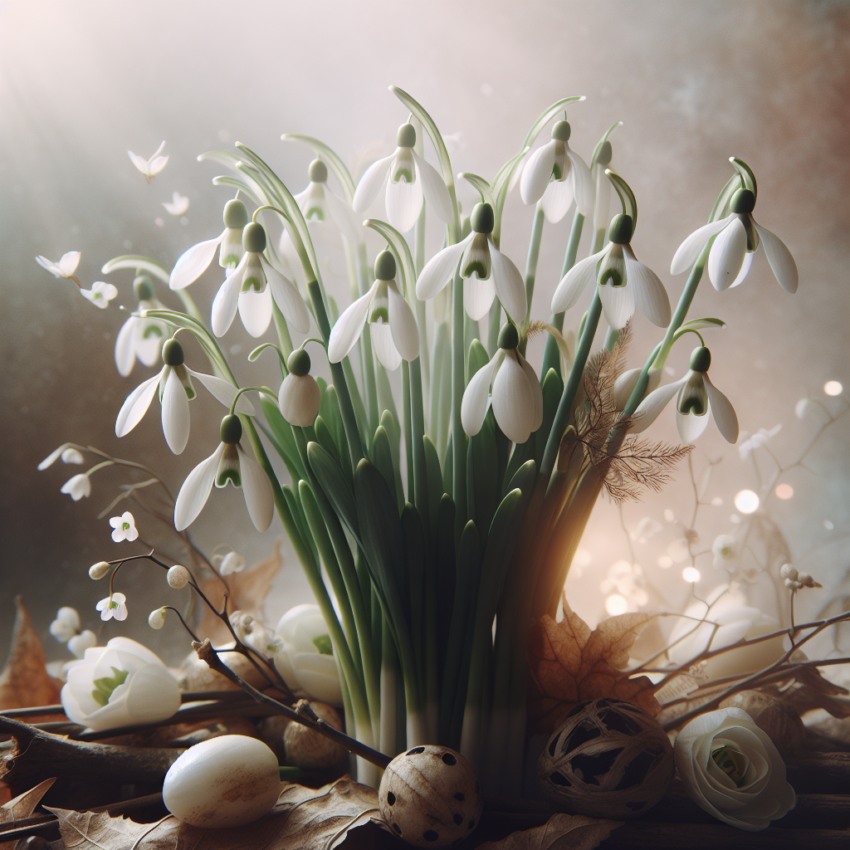
Snowdrops are among the first harbingers of spring, often peeking through the snow to bring hope and beauty during the coldest months of the year. Known scientifically as Galanthus, these dainty white blooms are a gardener’s delight and have inspired countless poets and artists. This article explores the enchanting world of snowdrops, covering their care, symbolism, and varieties.
Growing Snowdrops in Your Garden
Snowdrops thrive in well-drained soil, ideally under deciduous trees where they can benefit from the winter sun. Plant these bulbs in the fall for a delightful display in late winter. For best results, ensure the soil remains moist and avoid full afternoon sun, which can harm the delicate petals.
Choose between buying snowdrop bulbs or mature ‘in-the-green’ plants. The latter is often preferred by gardeners, as they establish more quickly. Remember, patience is key, as snowdrops may not bloom prolifically in their first year after planting.
Symbolism and Cultural Significance of Snowdrops
Snowdrops have long been a symbol of purity, hope, and renewal. In Victorian times, they were considered bad luck if brought indoors, but attitudes have shifted, and they are now cherished for their subtle beauty. Some cultures view snowdrops as a sign of renewal and transformation, offering a bright promise amidst the barren winter landscape.
Varieties of Snowdrops to Try
There are numerous varieties of snowdrops, each with its unique charm. Common types include Galanthus nivalis, the classic species, and Galanthus elwesii, known for its larger blooms. For enthusiasts, cultivars with double flowers or green markings provide an extra layer of interest.
Incorporating snowdrops into your garden or flower arrangements can create a serene atmosphere. Pair them with winter aconites or hellebores for a striking contrast of shapes and colors.
The Benefits of Snowdrops in Landscaping
Aside from their beauty, snowdrops are low-maintenance plants that require minimal care once established. They are pest-resistant and can naturalize, forming larger clumps over the years.
Furthermore, snowdrops can play a role in promoting biodiversity by providing early nectar sources for pollinators. Integrating these blooms into your garden not only enhances its aesthetic appeal but also supports the local ecosystem.
Snowdrops in Your Home
Bringing snowdrops indoors can brighten your space while adding a touch of elegance. Their subtle presence is perfect for minimalist decor or as part of a mixed bouquet. For more creative interior design ideas, consider styling your space with timeless elements like vintage maps.
Ensure that the blooms are at peak freshness by picking them early in the morning. This helps preserve their delicate nature and allows them to thrive for days in a vase.
Conclusion
Overall, snowdrops provide a delicate beauty that captivates gardeners and nature lovers alike. Their symbolism of hope and newfound beginnings resonates deeply with those who encounter them. Whether you’re cultivating them in your garden or simply admiring them in a vase, snowdrops remind us of the resilience and promise that come with every new season.
- Snowdrops bloom in late winter, often breaking through snow.
- They symbolize purity and hope, with cultural significance across the globe.
- Diverse varieties offer options for every gardener’s taste.
- Snowdrops support pollinators and naturalize over time.
- Incorporating them into home decor can add a touch of subtle elegance.
What are snowdrops?
Snowdrops (Galanthus) are bulbous plants known for their small, white, bell-shaped flowers that often bloom in late winter or early spring.
When is the best time to plant snowdrop bulbs?
The ideal time to plant snowdrop bulbs is in the fall, before the ground freezes, to ensure they bloom in the late winter.
How do snowdrops benefit our gardens?
Snowdrops attract early pollinators and are pest-resistant, making them an excellent addition to sustainable garden practices.
Can snowdrops be brought indoors?
Yes, snowdrops can be brought indoors; they brighten spaces with their subtle charm, perfect for minimalist or floral arrangements.
Are snowdrops easy to care for?
Snowdrops are generally low-maintenance, requiring well-drained soil and partial shade, thriving with minimal intervention.
For more information on snowdrops and related plant care, you may find additional resources on Wikipedia’s page on snowdrops.