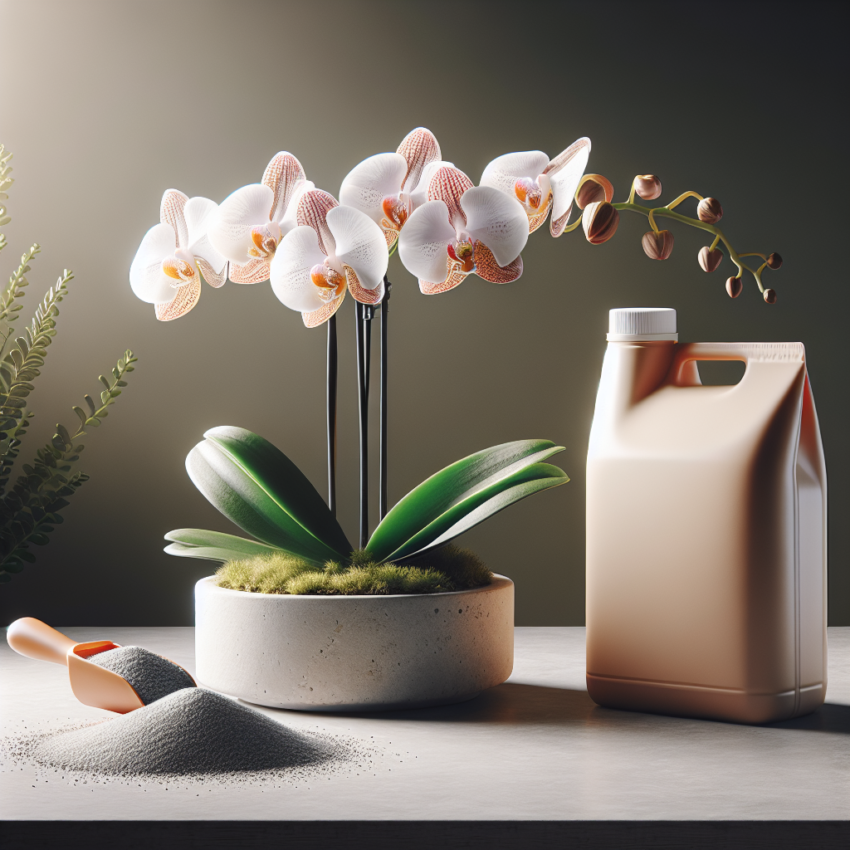
If you’re passionate about growing orchids, understanding how to choose the right orchid fertilizer is essential to achieving thriving blooms. Orchids require special care and nourishment, and fertilizer plays a crucial role in this process. With various options available, it can be challenging to determine which is best suited for your needs. In this guide, we’ll explore everything you need to know about selecting and using orchid fertilizer to promote vibrant flowers and healthy growth.
Understanding Orchid Fertilizer: Key Components
Orchid fertilizers come with a specific set of nutrients essential for the health of your plant. The main components of these fertilizers are nitrogen, phosphorus, and potassium, often referred to as N-P-K. Here’s how each plays a part:
- Nitrogen (N): Promotes leafy growth and overall plant health.
- Phosphorus (P): Supports the development of strong roots and the production of flowers.
- Potassium (K): Enhances overall robustness and disease resistance.
It’s important to look for a balanced fertilizer ratio, such as 30-10-10 for general use, or a higher phosphorus mix, like 10-30-20, during the blooming phase.
The Best Orchid Fertilizer: Considerations and Recommendations
Choosing the best orchid fertilizer involves understanding the specific needs of your orchid variety. Here are some considerations:
- Use a water-soluble fertilizer to ensure nutrients are easily absorbed by the plant roots.
- Consider using organic fertilizers, which can provide more balanced nutrients and microorganisms beneficial to the orchid’s health.
- Do not over-fertilize; orchids are sensitive to excessive nutrients. Using a “weakly weekly” approach, diluting fertilizer by 50% and applying it weekly, is often recommended.
Additionally, experimenting with specific formulations depending on the growth phase of your orchid can be beneficial. During active growth, a higher nitrogen fertilizer is ideal, while during the blooming phase, shifting to a higher phosphorus product encourages flowering.
Common Orchid Fertilizer Mistakes to Avoid
While choosing the right orchid fertilizer is key, ensuring you’re applying it correctly is equally important. Avoid these common mistakes:
- Overfertilizing: Using too much fertilizer can lead to root burn, hindering plant health.
- Underfertilizing: Orchids may not bloom as vigorously or may have poor foliage if they lack nutrients.
- Ignoring Plant Signals: Yellowing leaves or lack of blooms can signal incorrect fertilizer application.
By recognizing early signs and adjusting your fertilization routine accordingly, you can help your orchids thrive.
Alternative Orchid Care Tips
In addition to choosing the right orchid fertilizer, consider the following tips to maintain overall plant health:
- Ensure proper watering techniques, such as the “soak and dry” method, allowing the orchid’s potting medium to dry out before the next watering. Learn more with our irrigation installation guide.
- Provide adequate humidity, between 40-70%, to mimic their natural environment.
- Place orchids in bright, indirect sunlight to ensure sufficient photosynthesis without leaf burning.
By integrating these care practices along with the adequate use of fertilizer, you can enjoy the beauty of your thriving orchid collection.
Conclusion: Maximize Your Blooms with the Right Orchid Fertilizer
Selecting the right orchid fertilizer is a balancing act that requires understanding the specific needs of your plant. Consider your orchid’s growth phase, environmental conditions, and the N-P-K balance to maximize its health and blooms. Remember, the right nutrition at the right time can set the stage for stunning displays of color and vitality.
- Identify your orchid’s specific nutritional needs.
- Use a water-soluble or organic fertilizer for best results.
- Avoid overfertilizing to prevent nutrient burn.
- Tailor fertilizer concentration and frequency to the growth phase.
- Complement fertilization with correct watering and humidity levels.
What nutrients are essential in an orchid fertilizer?
The key nutrients in orchid fertilizers are nitrogen, phosphorus, and potassium (N-P-K), each playing a specific role in plant health and flowering.
How often should I fertilize my orchids?
It’s often recommended to use a “weakly weekly” approach, applying a diluted fertilizer solution every week to avoid overfertilization.
Can I use regular houseplant fertilizers on orchids?
Orchids require specific nutrients, so while houseplant fertilizers can be used in diluted form, it’s best to choose products formulated for orchids.
What is the ideal N-P-K ratio for orchids?
A balanced ratio like 30-10-10 for growth or 10-30-20 for blooming is generally suitable, but always consider your specific orchid species.
Are there any safe organic alternatives to synthetic orchid fertilizers?
Yes, organic options like kelp extract or guano can provide beneficial nutrients and microbes, supporting healthy growth with less risk of overfertilization.