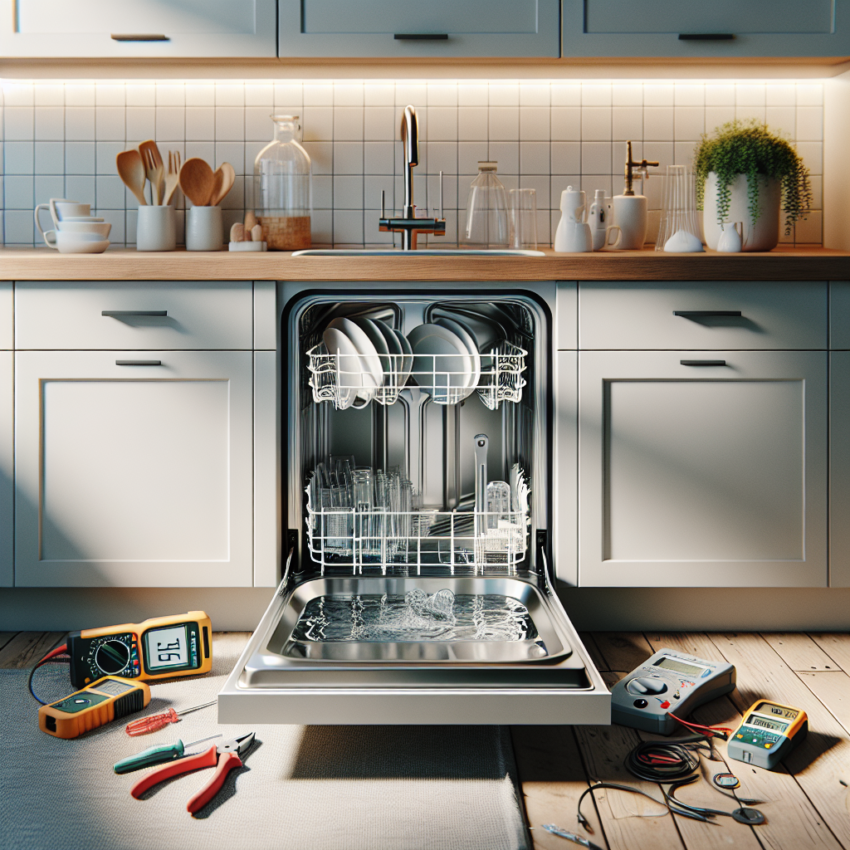
If your dishwasher is not draining, it can be a frustrating situation. A pool of standing water at the bottom of your appliance may indicate a simple issue, or it might require professional attention. Regardless, understanding the potential reasons and troubleshooting methods can save time and money. In this article, we’ll explore common reasons for a dishwasher not draining and offer practical steps to solve this problem.
Common Causes for A Dishwasher Not Draining
A dishwasher may fail to drain due to several reasons. This is a common household issue and often has simple fixes. Let’s examine some potential causes and what you can do to resolve them.
1. Blocked Drainage Hose
The drainage hose is crucial for the proper disposal of wastewater from your dishwasher. A clog in this hose can prevent the appliance from draining correctly. To check, first, disconnect the hose and inspect it for any debris or kinks. Cleaning out blockages can often restore normal drainage.
2. Clogged Garbage Disposal
If your dishwasher drains into your garbage disposal, a clog there can cause drainage issues. Clear any blockages from the disposal by following the instructions in your owner’s manual. Remember to clean the disposal regularly to prevent future clogs.
3. Dirty Filter
Your dishwasher has a filter that catches food particles and other debris. Over time, this filter can become clogged, hindering drainage. Remove the filter, clean it thoroughly with soapy water, and replace it to see if this resolves the issue.
4. Malfunctioning Drain Pump
The drain pump pushes water out of the dishwasher. If it fails, the water will not drain. In this case, you might need to consult a professional to either repair or replace the pump, as it requires more technical knowledge.
Steps to Troubleshoot Your Dishwasher
After identifying potential causes, you can troubleshoot your dishwasher not draining. Here are steps to follow:
Turn Off the Power
Before beginning any work on your dishwasher, ensure it is turned off and unplugged to avoid electrical hazards.
Check the Drain Hose
Inspect the hose for blockages and remove any debris. If the hose is kinked, try straightening it out, as this can improve water flow.
Check the Sink and Garbage Disposal
If your dishwasher’s water is backing up into the sink, it may indicate a blockage there. Run your garbage disposal to remove any clogs that could be affecting the dishwasher’s drainage.
Inspect and Clean the Filter
A clogged filter is a common reason for poor drainage. Ensure the filter is clean and reinstall it properly to allow water to pass freely.
Examine the Drainage System
If simple checks do not resolve the issue, your dishwasher’s drainage system may have a more complex problem that requires a technician. It’s important not to disassemble complex parts without mechanical expertise.
When to Call a Professional
If these troubleshooting steps do not rectify the issue, or you feel uncomfortable performing the investigations yourself, it may be time to call a professional. A qualified technician can diagnose and repair serious issues such as motor or pump failures.
For those interested in maintaining appliance efficiency, similar strategies apply to other home equipment. For example, consider reading about regular maintenance for common household gadgets to improve longevity and performance.
Preventative Tips to Avoid Future Issues
Prevention is key when it comes to avoiding a dishwasher not draining. Here are some maintenance tips:
- Run hot water down your sink drain regularly to prevent clogs.
- Inspect and clean the dishwasher’s filter monthly.
- Avoid overloading the dishwasher, which can cause particles to scatter and clog drains.
- Use the correct amount of dishwasher detergent to prevent excess suds.
By incorporating these practices into your routine, you can reduce the likelihood of encountering drainage problems with your dishwasher.
For more tips on household maintenance, refer to external expert sources. A useful resource for general household tips can be found on Wikipedia.
Conclusion
Experiencing a dishwasher not draining can be inconvenient, but understanding the potential causes and solutions can be empowering. By keeping your appliance well-maintained and addressing minor issues promptly, you can avoid larger problems.
- Check drainage hoses and filters if your dishwasher doesn’t drain properly.
- Regular maintenance can prevent drainage issues.
- Consult a technician if basic troubleshooting fails.
- Preventative care extends the life of your dishwasher.
- Maintain awareness of related household appliances.
FAQ
Why is my dishwasher not draining properly?
Your dishwasher may not be draining due to a clogged drain hose, filter, or even a malfunctioning pump. Start by checking these components.
How do I clean a dishwasher filter?
To clean the filter, remove it from the dishwasher and rinse it under warm water with a bit of soap to remove debris, then reinstall it as directed in your manual.
Can a garbage disposal cause a dishwasher drainage problem?
Yes, if the dishwasher is connected to a clogged garbage disposal, it can prevent drainage. Ensure the disposal is free and clear of obstructions.
What is the role of a drain pump in a dishwasher?
The drain pump pushes water into the drain hose. If it’s malfunctioning, a technician may need to repair or replace it to restore proper drainage.
When should I seek professional help for dishwasher drainage issues?
If basic troubleshooting does not resolve the problem, or if the dishwasher has complex mechanical problems, you should seek professional assistance.