Ear piercings have become more than just a fashion trend and many people now search for a reliable pain ear piercings chart before choosing the right piercing style. From simple lobe studs to bold industrial bars. Every ear piercing comes with a different pain level, healing time and aftercare process. Knowing which piercings hurt the most – which are safe for beginners will help you make safer and more informed choices.
In this guide you’ll learn about ear piercing pain levels, healing times, costs, popular cartilage styles and expert aftercare tips. That helps your piercing heal properly while looking stylish.
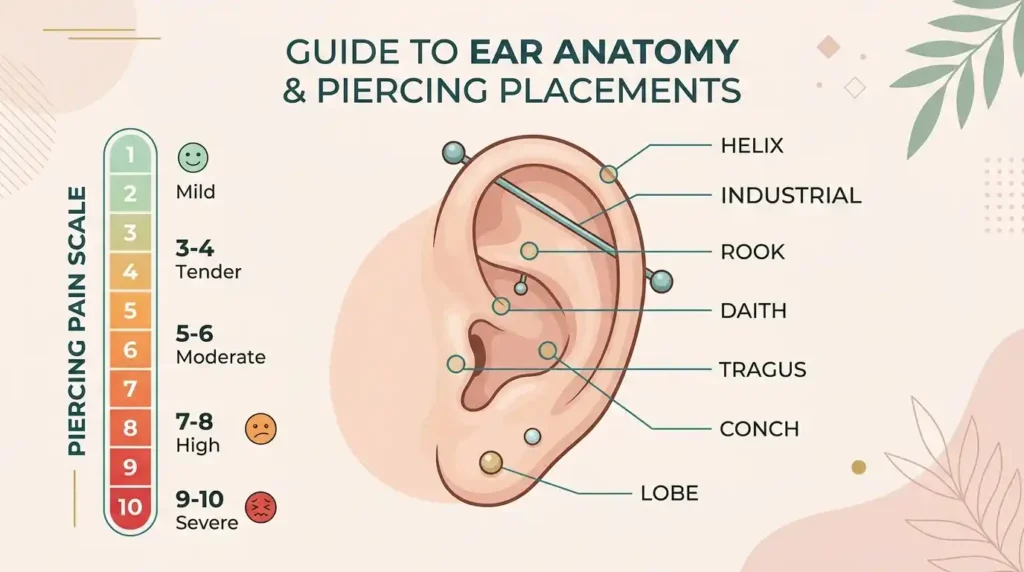
Ear Piercing Map: Understanding Different Ear Piercing Placements
Before making a choice you can use an ear piercing map to determine the precise placement of each piercing. Some piercings go through soft tissue – while others pass through thick cartilage.
Soft tissue piercings usually heal faster and hurt less. Cartilage piercings tend to be more painful and require longer aftercare.
Common ear piercing areas include:
- Earlobe
- Upper lobe
- Helix
- Forward helix
- Tragus
- Conch
- Rook
- Daith
- Snug
- Industrial bar piercing in the ear
Many people now combine multiple piercings to create a curated ear look – especially with ear piercings at the top and cartilage styles becoming more popular.
Pain Ear Piercing Chart (Least to Most Painful)
Earlobe Piercing – Pain Level: 1–2/10
The standard lobe piercing is the least painful option because it goes through soft flesh instead of cartilage. Most people only experience a slight pinch.
- Healing time: 6–8 weeks
- Best for beginners
- Easy aftercare
This is also the most affordable piercing option in most studios.
Upper Lobe Piercing – Pain Level: 2–3/10
Upper lobe piercings are slightly more sensitive because the tissue is firmer than the lower lobe. Still, they remain beginner friendly.
Many people pair upper lobe piercings with hoops or small gemstones for a layered ear style.
Helix Piercing – Pain Level: 4–5/10
Helix piercings are placed on the upper outer cartilage of the ear. The pain is moderate and usually comes with some swelling during healing.
If you want a complete breakdown of jewelry, healing stages and aftercare tips, this detailed guide on Helix Piercing Complete Guide to Pain, Healing, Jewelry & Aftercare is one of the best resources for understanding helix cartilage piercings naturally and safely.
Helix styles are especially popular among people – who want stylish ear piercings at the top without choosing something too extreme.
Forward Helix Piercing – Pain Level: 5–6/10
This piercing sits near the front cartilage above the tragus. It looks elegant but can feel sharper because the cartilage is thicker.
The popularity of double and triple forward helix piercings has increased in recent years.
Flat Cartilage Piercing – Pain Level: 5–6/10
Flat piercings sit on the large flat area of upper ear cartilage. It allows more space for creative jewelry combinations and works well in curated ear styling.
Healing takes longer than lobe piercings because cartilage receives less blood flow.
Tragus Piercing – Pain Level: 6/10
The little cartilage flap next to the ear canal is called the tragus. The pressure feels stronger here. Many people notice a crunching sound during the procedure.
Despite moderate pain, the tragus remains one of the most requested ear cartilage piercings.
Daith Piercing – Pain Level: 6–7/10
Daith piercings pass through thick inner cartilage. The pain level is higher because the tissue is dense and sensitive.
Although some people claim daith piercings help migraines – scientific evidence remains limited.
Conch Piercing – Pain Level: 6–7/10
Conch piercings are done in the center cartilage of the ear. They can hold studs or large hoops and create a bold statement look.
Inner conch piercings usually feel less intense than the outer conch placements.
Rook Piercing – Pain Level: 7/10
The rook is one of the thickest cartilage folds inside the ear – That makes it more painful than helix or tragus piercings.
Swelling may last longer – especially during the first few weeks.
Snug Piercing – Pain Level: 8–9/10
Snug piercings are known for high pain levels because they pass through thick curved cartilage. Healing can also be difficult.
Professional aftercare becomes extremely important with this piercing.
Industrial Bar Piercing in the Ear – Pain Level: 8–9/10
Industrial piercings connect two cartilage holes with a single long barbell. Because two piercings are involved, pain and healing time are both significantly higher.
Industrial bars remain one of the boldest male ear piercings and alternative fashion choices today.
Ear Cartilage Piercings Explained
Cartilage piercings involve tougher tissue than regular lobe piercings – That is why it hurts more and heals slower.
Popular ear cartilage piercings include:
- Helix
- Tragus
- Rook
- Daith
- Conch
- Industrial
Unlike soft tissue piercings, cartilage has reduced blood circulation. This means patience and proper cleaning are essential during healing.
Male Ear Piercings: Popular Styles & Trends
Male ear piercings continue to grow in popularity – especially minimalist cartilage styles.
Popular options for men include:
- Single helix piercing
- Industrial bar
- Conch hoops
- Tragus studs
- Double lobe piercings
Many men choose black titanium jewelry or silver hoops for a clean and modern appearance.
Ear Piercing Cost Guide
How Much Are Ear Piercings?
Ear piercing cost depends on the piercing type, jewelry quality and reputation of the studio.
Average prices include:
| Piercing Type | Average Cost |
| Earlobe | $20–$50 |
| Helix | $30–$70 |
| Tragus | $40–$80 |
| Industrial | $45–$100 |
Premium jewelry materials like gold or titanium may increase the total cost.
Ear Piercing Healing Time Chart
How Long Do Ear Piercings Take to Heal?
Healing times can change. It depends on the location and your aftercare routine.
| Piercing Type | Healing Time |
| Earlobe | 6–8 weeks |
| Helix | 6–9 months |
| Tragus | 6–12 months |
| Daith | 6–9 months |
| Industrial | 9–12 months |
Compared to lobe piercings, cartilage piercings typically require more patience.
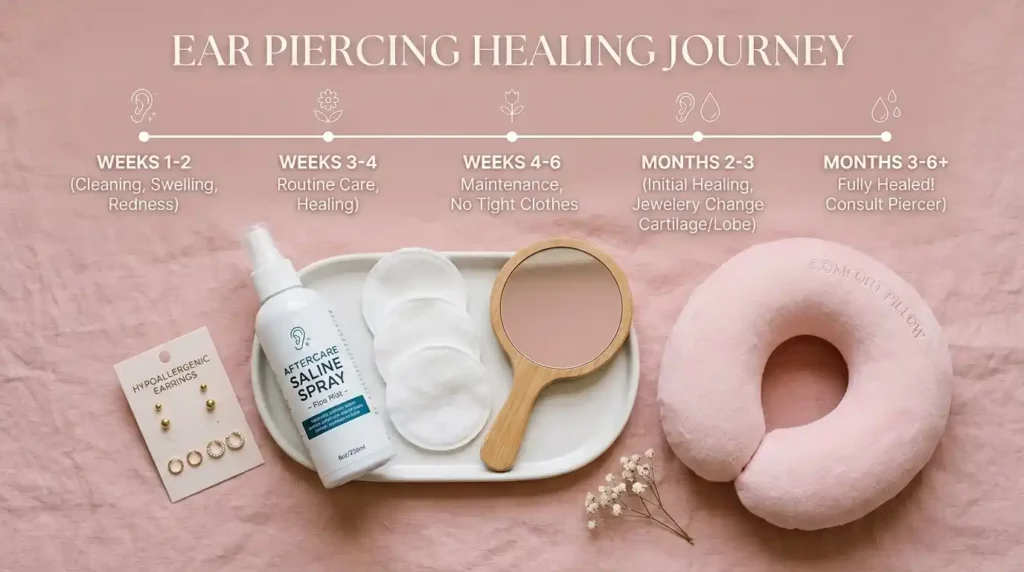
Ear Piercing Starter Kit – What You Need
A proper ear piercing starter kit can make healing smoother. And it reduces infection risks.
Your kit should include
- Sterile saline spray
- Cotton pads
- Travel pillow
- Hypoallergenic jewelry
- Alcohol free cleanser
Avoid harsh chemicals like hydrogen peroxide – because it may slow healing.
Factors That Affect Ear Piercing Pain
A piercing’s level of pain depends on a number of factors.
Cartilage Thickness
Thicker cartilage usually causes more discomfort.
Piercing Technique
Professional needle piercings are safer and cleaner than piercing guns.
Jewelry Type & Gauge
Many beginners ask:
What gauge is a regular ear piercing?
Normally 20G or 18G jewelry is used for standard lobe piercings.
Anxiety & Stress
Fear and tension can increase pain sensitivity during the procedure.
Ear Piercing Aftercare Tips
Healing is quicker and problems are decreased with proper aftercare.
Cleaning Routine
With sterile saline solution – clean the piercing twice daily .
Sleeping Position
Avoid sleeping directly on fresh cartilage piercings.
Can You Swim After Getting Ears Pierced?
It’s best to avoid pools, lakes and hot tubs for at least 4–6 weeks after a new piercing because bacteria can increase infection risk.
Common Ear Piercing Problems & Solutions
Why Do My Ear Piercings Smell?
Oil, dead skin and moisture around the jewelry are normally the causes of mild smell.
Why Does Ear Piercing Stink?
Odor formation is frequently caused by poor cleaning practices or excessive touching. Persistent smell combined with swelling may indicate infection.
Swelling & Irritation
During the initial days, some swelling is normal.
Keloids & Bumps
Improper aftercare or irritation can trigger piercing bumps.
People who are interested in advanced body jewelry styles and look for detailed guides. One useful resource is Body Piercing Microdermal Complete Guide, Jewelry, Aftercare & Best Products. It helps to understand the healing process better. Moreover it describes jewelry quality and skin reactions in different piercings.
When Can I Change My Ear Piercing?
It can harm healing tissue to replace jewelry too soon.
General timelines include:
- Lobe piercings: 6–8 weeks
- Helix piercings: 6 months or longer
- Industrial piercings: up to 12 months
Before changing jewelry always ensure complete healing.
Do Ear Piercings Close?
Yes – especially newer piercings. If jewelry is removed, fresh piercings may begin to close within hours.
Older piercings usually stay open longer – but can still shrink over time.
How many ear piercings are possible at once?
At the same time Professional piercers usually recommend limiting yourself to 2–3 healing piercings.
Too many cartilage piercings at once can slow healing and increase swelling.
Baby & Newborn Ear Piercing Guide
When Can Newborns Get Their Ears Pierced?
Some parents choose newborn ear piercing within the first few months – while others wait until the child is older.
Use a health care facility or a professional piercer at all times.
How Much Time Does a Baby’s Ear Piercing Take to Heal?
If cleaned properly and left untouched – Baby ear piercings generally heal within 6–8 weeks.
Can You Get Your Ears Pierced While Pregnant?
Because hormonal changes might impact recovery and raise the risk of infection – So many experts advise waiting until after pregnancy.
The safest option is always to consult a healthcare professional.
Final Thoughts Pain Ear Piercings Chart
Your dedication to aftercare, style choices and pain threshold all play a role in selecting the best ear piercing. Lobe piercings are ideal for beginners – while cartilage and industrial styles offer a bolder appearance for experienced piercing enthusiasts.
No matter which piercing you choose, proper cleaning, patience and high quality jewelry make the biggest difference in achieving a healthy and stylish result.