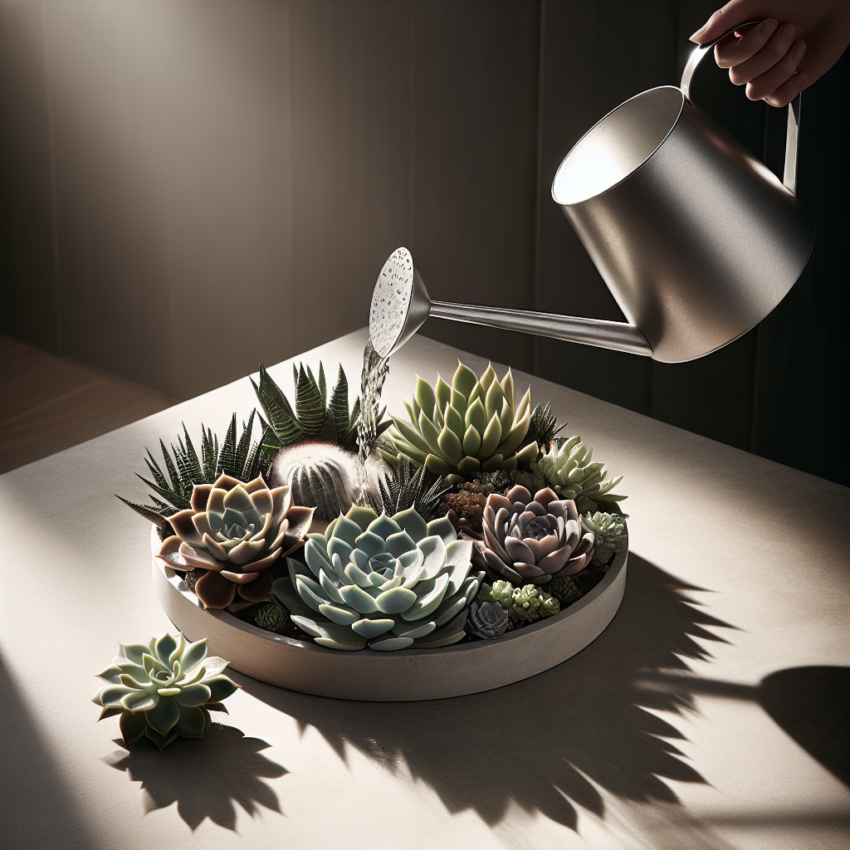
Succulents have captured the hearts of many plant lovers, celebrated for their low maintenance and unique beauty. However, mastering how to water succulents remains a challenge for many. Understanding the specific needs of these drought-tolerant plants can make the difference between a thriving windowsill garden and a collection of withered green companions.
How to Water Succulents
Watering succulents involves a delicate balance. These plants store water in their leaves, stems, or roots, allowing them to survive in arid conditions. Providing too much moisture can lead to root rot, while too little can cause dehydration. Let’s explore the best practices to ensure your succulents are well hydrated without being waterlogged.
Understanding the Needs of Succulents
Succulents thrive in conditions that mimic their native environments, often characterized by sandy, well-draining soil and infrequent rain. When watering, think of it more as giving them a refreshing drink rather than saturating the soil.
Signs of Over-watering and Under-watering
Identifying the signs of improper watering is crucial. Over-watered succulents often have mushy, transparent leaves, while under-watered ones will exhibit shriveled or dry leaves. Always be attentive to these cues.
A Step-by-step Guide to Watering Succulents
- Ensure your pots have drainage holes to allow excess water to escape.
- Use a soil specifically designed for succulents or a blend that promotes drainage, such as adding sand or perlite.
- Water the soil directly rather than moistening the leaves.
- Allow the soil to dry out completely between waterings to prevent root rot.
- Adjust the watering schedule based on the season: more frequent in summer and less in winter.
For anyone interested in automated watering systems for their broader garden, checking out this guide to irrigation installation systems can provide insights into modern solutions.
Seasonal Considerations
Seasonal changes in temperature and sunlight affect how often you should water your succulents. During their growing season, typically spring and summer, they may require more water. Conversely, in their dormant period, which spans fall and winter, reduce the frequency to safeguard against over-watering.
Using the Right Tools
Opt for tools that can help you assess moisture levels, like a moisture meter. Some gardeners prefer using a squeeze bottle or syringe for precision watering, ensuring the base of the plant receives all the attention while the leaves remain dry.
Succulent Watering Myths Debunked
It’s a common misconception that misting succulents is a suitable watering method. What succulents need is deep watering that reaches the roots, not just surface moisture. Another myth is that all succulents have the same water requirements. In reality, variations exist, and some species may be more tolerant of water than others.
Conclusion
Understanding how to water succulents can transform your plant care routine from guesswork to science. With the right strategy, you’ll enjoy vibrant, healthy succulents that are resilient and thriving. For more information on maintaining healthy plants, consider visiting external sources like this Wikipedia page on succulent plants.
- Succulents need well-draining soil and proper watering techniques.
- Avoid watering the leaves directly; focus on the soil instead.
- Adjust watering frequencies according to seasonal changes.
- Use tools like moisture meters for accurate assessment.
- Learn about individual species’ needs for optimal care.
FAQ
How often should I water my succulents?
Generally, water succulents every 1-2 weeks during the growing season and once a month in the dormant period. However, this can vary based on climate and indoor conditions.
Can succulents be grown outdoors all year?
While many can, it depends on your local climate. Most succulents prefer above-freezing temperatures, but some hardy varieties can withstand a broader range.
What should I do if my succulent starts to rot?
If you notice rot, remove the plant from its pot immediately, trim away the affected areas, let it dry, and repot in fresh soil.
Is it necessary to fertilize succulents?
Fertilizing isn’t as crucial as proper watering, but a diluted, balanced fertilizer can support growth during the active season.
Why are my succulent leaves falling off?
Leaf drop can stem from over-watering, under-watering, shock, or simply natural growth processes. Inspect your plant and environment to determine the cause.