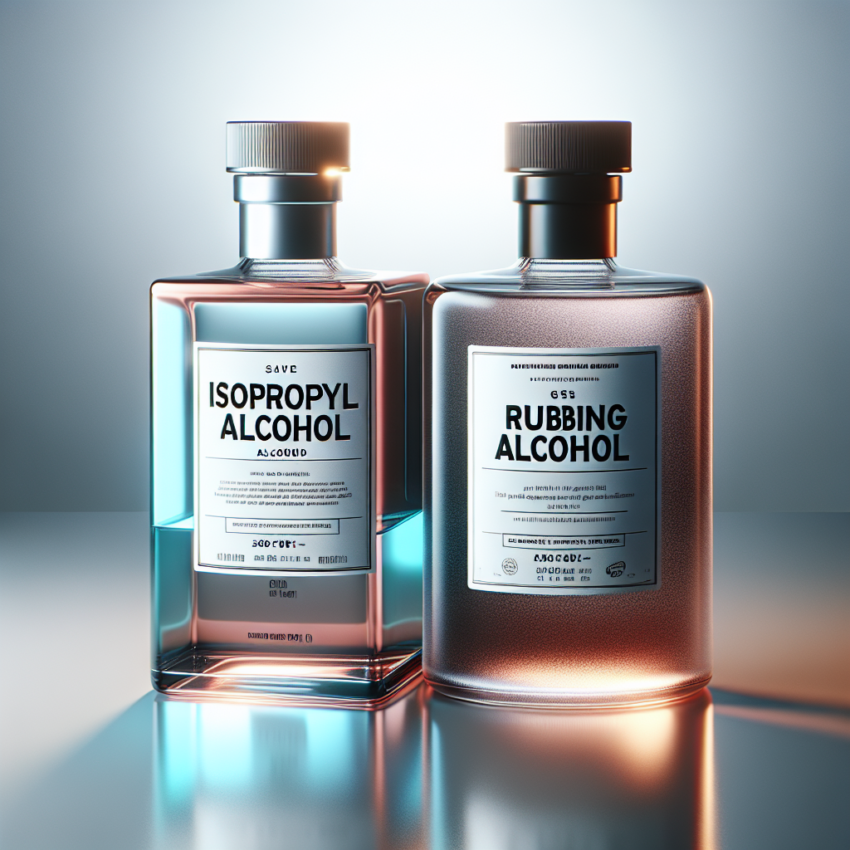
If you’ve ever found yourself rummaging through your first aid kit or browsing the aisles of a drugstore, you’ve likely wondered, “Is isopropyl alcohol the same as rubbing alcohol?” A common question for many, especially when both often appear side by side in households and pharmacies. While they may seem identical at first glance, understanding their similarities and differences can be crucial for safe and effective use.
Is Isopropyl Alcohol the Same as Rubbing Alcohol?
To answer whether isopropyl alcohol is the same as rubbing alcohol, we need to delve into their compositions and common uses. Isopropyl alcohol, also known as isopropanol, is a clear, colorless liquid commonly used as a solvent and antiseptic. Rubbing alcohol, on the other hand, is a general term that may refer to solutions containing isopropyl alcohol or ethanol mixed with water and other additives.
In most cases, when people refer to rubbing alcohol, they are talking about a solution that contains around 70% isopropyl alcohol, with the remaining 30% being water and a denaturant to make it unpalatable for consumption. Whether you purchase isopropyl alcohol or rubbing alcohol, it’s crucial to read the label to understand its specific concentration and intended use.
Common Uses and Differences
The primary use of both isopropyl alcohol and rubbing alcohol is disinfection. They are incredibly effective at killing germs and bacteria, which is why they are staple items in any first aid kit. However, their suitability can vary based on the concentration.
Isopropyl alcohol is often used for disinfecting surfaces in medical settings, cleaning wounds, and even as a solvent in laboratory environments. Rubbing alcohol, due to its diluted nature, is primarily used for sanitizing skin before injections or minor first aid.
Another notable distinction between the two is the potential for drying out the skin. Rubbing alcohol often contains additional ingredients that prevent skin drying, which is less of a concern with isopropyl alcohol when used in environments where its drying effects are negligible, such as surface cleaning.
Safety and Precautions
Safety should always be your priority when handling either isopropyl or rubbing alcohol. Although both are antiseptics, they are not safe for ingestion and should be kept out of reach of children. Avoid using these products directly on sensitive areas such as eyes or mucous membranes.
The strong nature of these chemicals means they should be used in well-ventilated areas to prevent inhalation of fumes that can cause headaches or dizziness. Furthermore, both are highly flammable, and caution should be taken to keep them away from open flames or sources of heat.
Is Rubbing Alcohol the Same as Isopropyl Alcohol for Household Use?
In the household context, both isopropyl and rubbing alcohol find widespread use beyond first aid. They can serve as cleaning agents for electronics, remove sticky residues, and even act as a deodorizer for gym gear. However, understanding that rubbing alcohol may contain additional components means it’s crucial to ensure that those ingredients are safe for the intended use.
In sum, is isopropyl alcohol the same as rubbing alcohol? While they share many similarities, the key is comprehending their compositions and purposes. Such knowledge can enhance their usage efficiency and safety.
Takeaways
- Isopropyl alcohol and rubbing alcohol have similar uses but are not identical.
- Always check the concentration and components in the product label.
- Both are effective antiseptics but have different applications.
- Exercise caution due to their flammable nature and potential health effects.
- For further information on health-related topics, visit our Health category.
Frequently Asked Questions
What is the main component of rubbing alcohol?
The primary component of rubbing alcohol is usually either isopropyl alcohol or ethanol in a water solution, often accompanied by a denaturant to deter ingestion.
Can rubbing alcohol be used to disinfect surfaces?
Yes, rubbing alcohol is an effective disinfectant for surfaces, particularly when it contains at least 70% alcohol by volume.
Is it safe to apply isopropyl alcohol on wounds?
While isopropyl alcohol is an effective antiseptic, it can be harsh on open wounds and should be used with care to avoid irritation. Consult a healthcare provider for alternatives.
Does rubbing alcohol expire?
Yes, rubbing alcohol can lose efficacy over time as the alcohol evaporates, typically having a shelf life of around two to three years.
Are there alternatives to rubbing alcohol for disinfection?
Alternatives include hydrogen peroxide, vinegar, and bleach solutions, but it’s crucial to ensure they are appropriate for the specific disinfecting task and used safely.