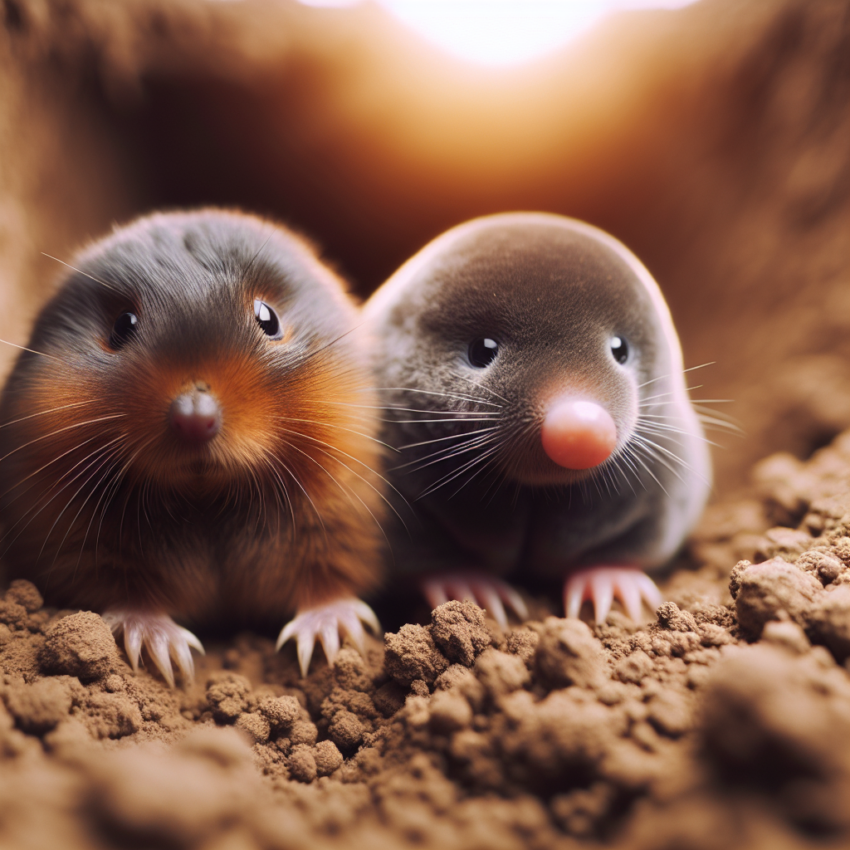
If you’ve ever noticed little mounds of dirt in your garden or chewed-up plants, you might have encountered some subterranean visitors. Understanding the difference between a vole and a mole is crucial not just for resolving yard issues but also for general wildlife awareness. In this article, we’ll explore the distinctions of vole vs mole, ensuring you’re equipped with the right knowledge to identify these critters.
Understanding Vole vs Mole
The primary difference between voles and moles lies in their diet and physical characteristics. Voles are small rodents that closely resemble mice, characterized by their stout bodies, short tails, and partiality for plant matter. Moles, on the other hand, are not rodents. They belong to the order of mammals called Eulipotyphla and are renowned for their digging prowess, primarily consuming insects and worms.
Physical Characteristics
Voles typically have rounded bodies covered in dense fur, with small ears and eyes that are often difficult to discern. They thrive in grassy areas, feeding on a variety of plants, seeds, and sometimes insects. Meanwhile, moles have a more cylindrical body shape with large, spade-like forelimbs designed for digging. Their small eyes and ears are often hidden beneath their fur, making them well-adapted for a life underground.
Behavior and Habitat
Moles are expert diggers, creating extensive tunnel systems in search of food. These tunnels can become a nuisance as they disrupt root systems and can cause surface instability. In contrast, voles are more likely to create runways on the surface, appearing like narrow trails in grasslands or gardens. While voles do burrow, they generally make much less extensive tunnels than moles.
Impact on Gardens
When it comes to gardening, voles can be detrimental by feeding on roots, seeds, and bulbs, leading to plant damage or death. They may also girdle small trees and shrubs. Conversely, moles indirectly affect gardens by disrupting plant systems through their digging activities. They are less harmful to plants directly but can cause cosmetic damage to lawns and garden spaces.
Management and Control
If you notice signs of these creatures in your yard, it’s essential to employ humane and effective control methods. For voles, regularly mowing your lawn and removing excess vegetation can reduce habitat attractiveness. To deter moles, consider using sonic deterrents or planting mole-repelling plants. For tailored advice and management strategies, consulting with a pest control expert is often recommended. For more information on how specific measures can impact wildlife, consider exploring practical environmental practices to safeguard both property and creature.
Further Scientific Understanding
To gain a deeper insight into these creatures’ roles in the ecosystem, researchers continue to study them. Both voles and moles play crucial roles in soil aeration and the biological control of insect populations. If you’re interested in learning more about these fascinating creatures, including their ecological benefits, visit the informative resource at Wikipedia’s dedicated page on moles.
In conclusion, distinguishing between vole vs mole can help homeowners make informed decisions about managing these animals in their gardens. Both animals have unique traits and ecological roles that contribute to the biodiversity of an area. Understanding these differences can lead to more effective and compassionate wildlife management.
- Voles and moles differ significantly in diet and physical attributes.
- Voles are rodents and plant-eaters, while moles consume primarily insects.
- Moles create extensive tunneling systems; voles form surface runways.
- Both impact gardens differently: voles through feeding, moles through digging.
- Effective pest control requires humane methods and understanding their ecological roles.
Frequently Asked Questions
What are the main physical differences between a vole and a mole?
Voles resemble small mice with rounded bodies and dense fur, while moles have cylindrical bodies with spade-like limbs for digging and eyes and ears hidden beneath their fur.
How do moles impact garden ecosystems?
Moles can disrupt gardens through their tunneling activities, which can uproot and expose plant roots, although they don’t directly feed on plants.
What techniques can be used to control vole populations?
Maintaining short grass, removing dense vegetation, and using certain wildlife deterrents can help mitigate vole populations in gardens.
Do voles and moles serve a beneficial role in the environment?
Yes, they both contribute to soil aeration and insect population control, supporting a balanced ecosystem.
Where can I find more detailed scientific information on these animals?
For more in-depth knowledge on voles and moles, visit reputable resources such as Wikipedia’s vole page or consult scientific studies and wildlife guides.