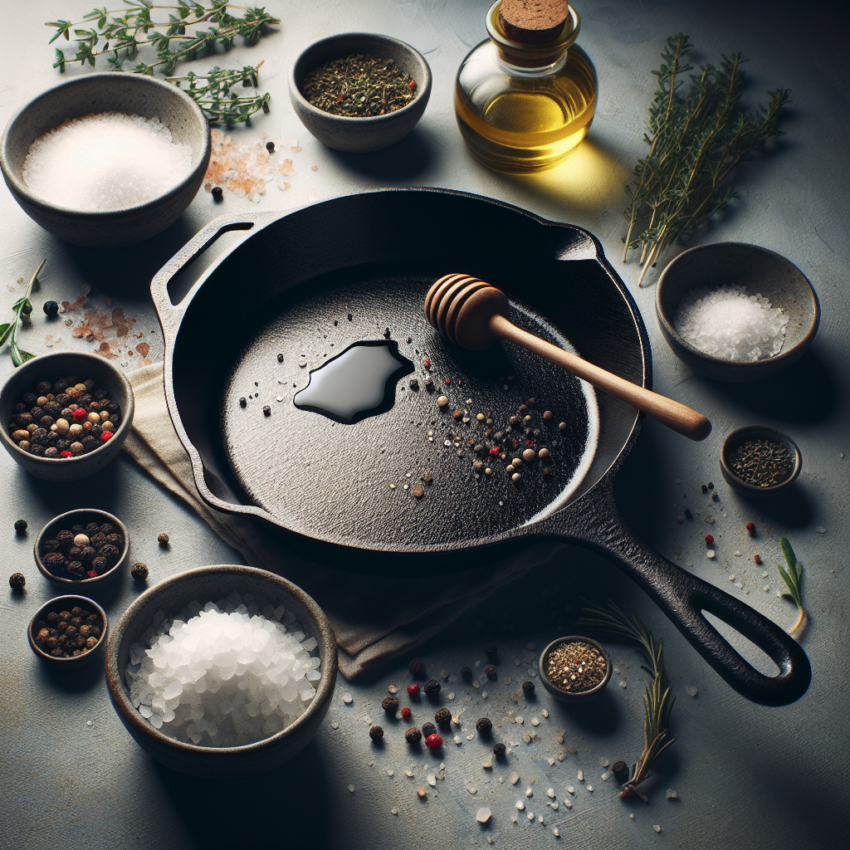
Cooking with cast iron offers both culinary and health benefits, but mastering cast iron seasoning is crucial to ensure your skillet or pan performs optimally. This technique not only enhances heat retention and distribution but also protects the cookware from rust and improves the flavors of your dishes. Let’s explore how you can perfect this process for perfectly cooked meals.
Understanding Cast Iron Seasoning
Cast iron seasoning involves creating a non-stick surface by applying a thin layer of oil and heating it to a high temperature. The oil polymerizes, forming a protective coating on the iron. This process not only ensures that food doesn’t stick but also prevents rusting, offering a symbiotic solution for maintaining your cast iron cookware.
The Right Oils for Seasoning
Choosing the right oil is pivotal in the seasoning process. Oils with high smoke points, such as flaxseed oil, soybean oil, or vegetable oil, are commonly used. The high smoke point helps in forming a more robust layer, enhancing the cookware’s durability and non-stick capability. Be sure to apply a thin, even layer for the best results.
Steps to Proper Seasoning
- Preheat your oven to around 450°F (232°C).
- Thoroughly clean your cast iron pan with warm, soapy water and dry it completely.
- Apply a small amount of your chosen oil all over the pan, including the handle and edges.
- Place the pan upside down on the oven rack and allow it to bake for approximately an hour.
- After turning off the oven, let the cookware cool inside. This method ensures that the oil bonding is strong and even.
Maintaining Your Cast Iron Cookware
Once your cast iron is well-seasoned, maintaining it is relatively simple. Avoid using harsh detergents or abrasive sponges that might strip the seasoning. Instead, clean with hot water and a soft brush. For stubborn foods, a paste of coarse salt and water can be gently scrubbed over the surface. Periodically applying a light coat of oil after use keeps the seasoning intact and ready for future culinary endeavors.
Common Misconceptions
Despite its robustness, cast iron isn’t invincible. A common myth is that a well-seasoned pan is completely non-stick. While it’s true that the seasoned layer offers non-stick properties, it’s crucial to use oils or fats when necessary. Another misconception is that acidic foods like tomatoes and citrus will damage the seasoning. While it’s wise to limit exposure, occasional use won’t permanently damage a well-maintained pan.
Iron-rich cooking can also be a health benefit, albeit with moderation. For more health insights related to natural lifestyle approaches, explore how natural remedies and supplements can support menopause brain fog.
Understanding the environmental impact and sustainability of cast iron is also worthwhile. These durable pieces, if properly maintained, can be passed down generations, reducing cookware waste compared to non-stick counterparts that wear out more quickly.
FAQs
How often should I re-season my cast iron pan?
The frequency of seasoning varies depending on use. Regular cooking with oils can help maintain the layer, but if food starts sticking, it’s time to re-season.
Can I use my cast iron pan on induction cooktops?
Yes, cast iron is compatible with induction cooktops because the iron composition works well with the electromagnetic field of these stoves.
What should I do if my cast iron cookware rusts?
If rust appears, scrub it with steel wool and re-season the pan. Consistent maintenance can prevent rust from forming.
Are there any foods I should avoid cooking in cast iron?
While long-simmering acidic foods can strip the seasoning, brief cooking periods won’t have significant negative effects.
Can I put my cast iron cookware in a dishwasher?
No, dishwashers can strip the seasoning due to harsh detergents and prolonged exposure to water. Hand washing is recommended.
Mastering cast iron seasoning is a journey to achieving the perfect balance between flavor and cookware care. By integrating the techniques mentioned, your cast iron skillet can become an invaluable kitchen asset, enhancing meal preparation and enriching your culinary repertoire for years to come. For further healthy cooking insights, consider visiting this comprehensive health resource.
- Use high smoke point oils like flaxseed, soybean, or vegetable oil for the best seasoning results.
- Clean cast iron with hot water and a brush. Pat dry immediately to avoid rust.
- Season your cookware periodically to maintain non-stick properties and rust prevention.
- Avoid dishwashers; they can damage the seasoning layer.
- Pass down your well-maintained cast iron cookware as sustainable kitchen investments.