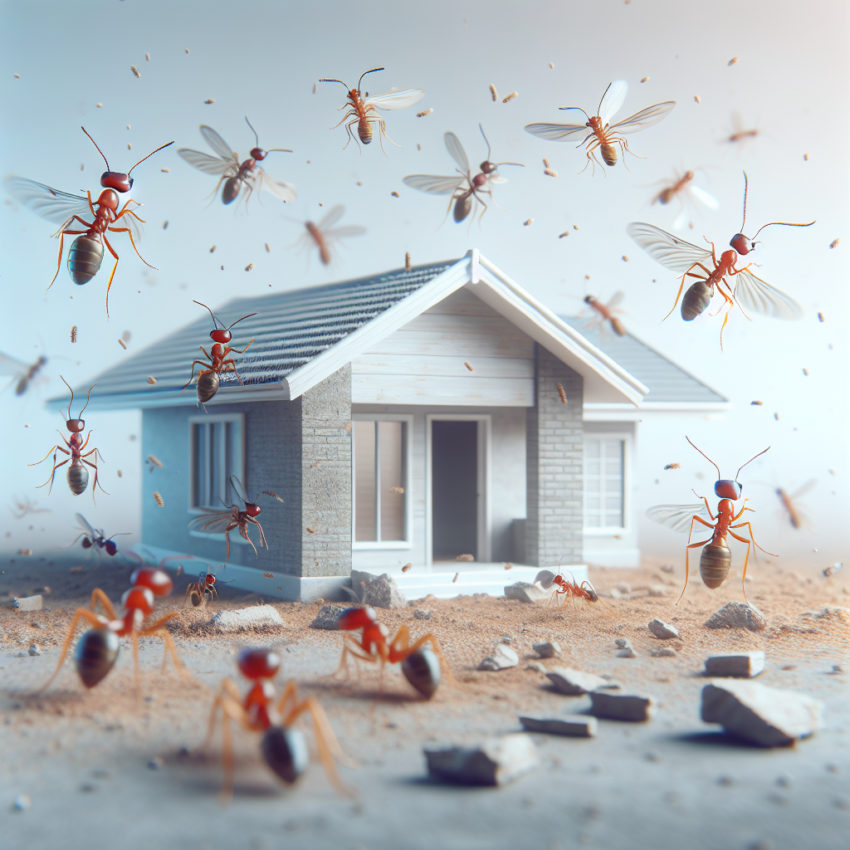
Flying ants and termites both possess wings, making it challenging for homeowners to distinguish between the two. Understanding the differences is essential to protect your home from potential damage. In this article, we will explore the key characteristics that set these two winged insects apart, helping you identify and address any potential infestations effectively.
Flying Ants vs Termites: Key Distinctions
At first glance, flying ants and termites may look similar, but there are distinct characteristics to look for. Observe their antennae, body shape, and wings to spot the difference between a flying ant vs termite.
- Antennae: Flying ants have elbowed antennae, whereas termites possess straight, beaded antennae.
- Body Shape: Flying ants have a narrow waist, giving their bodies a defined three-segment appearance. In contrast, termites have a more uniform body width.
- Wing Characteristics: While both have two pairs of wings, the front wings of flying ants are longer than the back pair. Termite wings are of equal length.
Recognizing these differences will aid you in identifying whether the insects you’re observing are flying ants or termites, thus allowing for appropriate measures to be taken.
Understanding the Habits and Habitats
The habitats and behaviors of flying ants and termites provide further clues. Flying ants are usually seen during specific periods when they swarm briefly to mate. These swarms are typically harmless, and after mating, they often die quickly or return to their colonies. Flying ants are more attracted to sugary substances and can often be found near outdoor lights.
On the other hand, termites are a significant threat because they feed on wood, potentially causing extensive damage to your home’s structure. Termites are subterranean and build mud tubes for shelter as they travel, which helps in identifying an infestation. Spotting these mud tubes can be a clear sign of a termite problem.
Preventive Measures and Home Protection
Once you’ve determined whether you’re dealing with flying ants or termites, the next step is to take action to protect your home. Here are some preventive strategies:
- Seal Entry Points: Close off any gaps or crevices where insects might enter your home.
- Reduce Moisture: Repair leaking taps, pipes, and exterior wood to eliminate potential habitats for termites.
- Remove Wood and Brush: Keep woodpiles and brush away from the house to prevent termite access.
Implementing these measures can help safeguard your home from both flying ants and termites.
Professional Inspection and Treatment
If you’re unable to determine the nature of the infestation or if the problem persists, it’s advisable to seek professional pest control services. Professionals can accurately identify the insects and suggest effective treatments to address the issue. For more information on how pests can impact health and the environment, you can visit this detailed resource.
Additionally, consider researching the potential benefits of peptides for overall health and well-being.
The Importance of Early Detection
Early detection is critical in managing flying ants vs termites effectively. Regularly inspecting your home and keeping it well-maintained can prevent minor issues from becoming major infestations. Being proactive not only saves money in repairs but also ensures the safety and longevity of your home’s structure.
Conclusion: Flying Ants vs Termites
Understanding the differences between flying ants vs termites is crucial for effectively dealing with these pests. By recognizing their unique traits, adopting preventive measures, and seeking professional help when necessary, you can protect your home from potential damage. Stay informed and vigilant to keep your living environment safe and pest-free.
- Flying ants and termites look similar but have distinctive physical differences.
- Termites pose a greater threat as they feed on wood and can cause structural damage.
- Prevention includes sealing entry points and reducing moisture around the home.
- Professional inspection is advised if you cannot determine the insect type.
- Early detection and regular home maintenance are keys to preventing infestations.
FAQs
Are flying ants and termites harmful to humans?
Flying ants are generally not harmful, although their presence can be a nuisance. Termites do not harm humans directly but can cause extensive damage to wood structures.
Can flying ants damage my home?
Flying ants are harmless to your home’s structure. However, their presence can indicate a colony nearby, which may require attention if they become a persistent issue.
When is the swarming season for these insects?
Swarms typically occur during warm, humid months. Both flying ants and termites take to the air in significant numbers for mating during these periods.
What attracts winged ants and termites indoors?
Winged ants are drawn to sugary foods and lights, while termites are attracted to wood materials and areas of high moisture in structures.
Should I treat flying ants the same as termites?
No, they require different treatments. Flying ants often do not require intervention, while termites should be addressed promptly by pest control professionals to prevent structural damage.