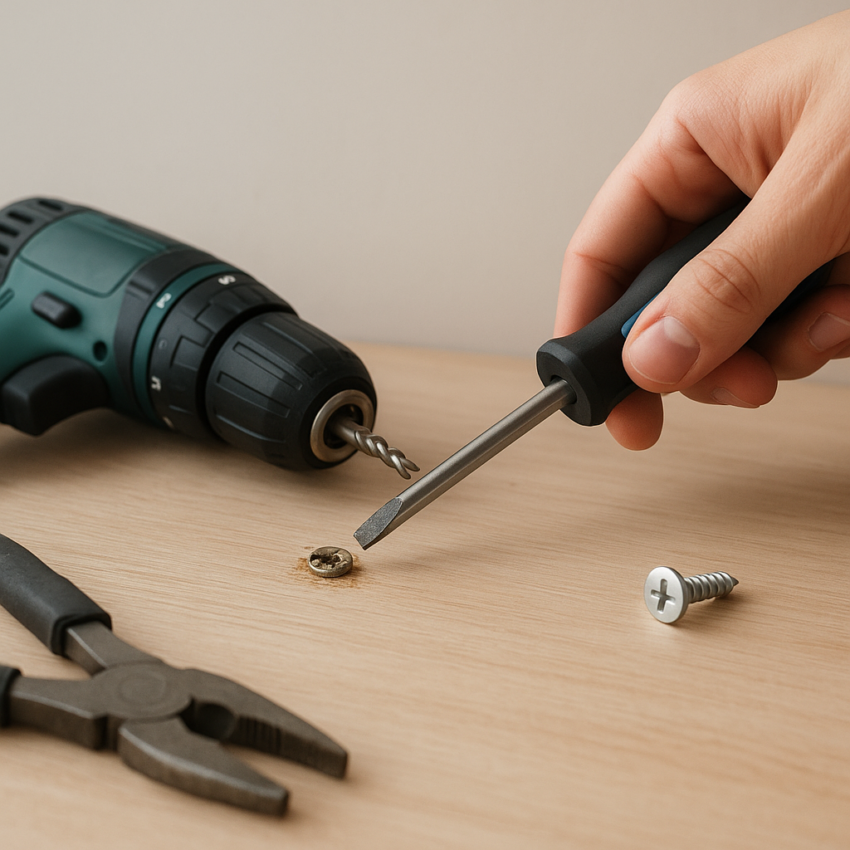
Encountering a damaged screw can be a frustrating moment in any home improvement project. Whether you’re trying to dismantle an old piece of furniture or make repairs, knowing how to take out a damaged screw is essential. Fortunately, there are several effective techniques you can employ to tackle this common issue, ensuring your DIY efforts proceed smoothly and without unnecessary setbacks.
Techniques on How to Take Out a Damaged Screw
Getting a good grip on a stripped screw head can sometimes seem impossible with just a regular screwdriver. However, with the proper tools and methods, you can extract even the most stubborn screws. Let’s explore some practical techniques.
1. Use a Rubber Band and Screwdriver
This method is simple yet effective. Place a rubber band over the damaged screw head and insert the screwdriver. The rubber band increases friction and fills in some gaps, allowing you to turn the screw more easily without slipping.
2. Wide-Blade Screwdriver
If you suspect that your screwdriver isn’t getting enough purchase, try switching to a wide-blade screwdriver. The added blade width can offer extra leverage, providing the torque necessary to unscrew the damaged fastener.
3. Screw Extractor Set
Screw extractor kits are designed specifically for removing stripped screws. They typically feature a drill bit on one end and a grabber on the other. Start by drilling into the screw with the appropriate end and then use the grabber end to twist the screw out.
4. Locking Pliers
For screws with exposed heads, locking pliers can be invaluable. Firmly grip the head with the pliers and twist counterclockwise. This method is excellent for screws that have been stripped below the surface.
5. Drilling Out the Screw
If other methods fail, drilling out the screw might be necessary. Use a drill bit slightly smaller than the screw shaft diameter. Drill through the center, ensuring you maintain alignment to avoid damage to surrounding material. For more complex projects, discover how innovative approaches are transforming materials with our blog post on technology reuse.
6. Using a Hammer
Another unconventional approach is using a hammer to lightly tap the screwdriver into the screw head. This technique can create new indents for the screwdriver, offering you a stronger grip to extract the screw.
7. Heat Treatment
Applying heat to the screw can expand it slightly, potentially making it easier to remove. A soldering iron or a heat gun applied directly to the screw for a few seconds can do the trick. However, exercise caution to avoid damaging any surrounding material.
Additional Tips
It’s critical to use the right screwdriver head that matches the screw. Strips often occur due to mismatched tools. Also, conduct all these methods gently to avoid damaging the surface or the tool itself. For detailed understanding, you can learn more about screw extractors.
Final Thoughts
Knowing how to take out a damaged screw effectively can save you both time and effort in any project. By adopting these techniques, you can master the art of screw extraction without expensive tools or needless frustration. With patience and the right approach, you’ll handle any damaged screw like a pro.
- Utilize tools like rubber bands or locking pliers for better grip.
- Consider a screw extractor set for tricky screws.
- Heat can help with removal, but use it cautiously.
- Drilling out may be necessary for deeply embedded screws.
- Consistently use the correct screwdriver type to prevent damage.
FAQ
What causes screws to get damaged?
Several factors, such as using the wrong screwdriver size, over-tightening when initially securing the screw, and wear over time, can lead to damage.
Can I use a drill to remove a stripped screw?
Yes, a power drill can be useful. Select a drill bit slightly smaller than the screw, then carefully drill into or around the screw to loosen it.
Are there any screws that are more prone to stripping?
Screws made of weaker metals, such as aluminum, and those with shallow heads are more vulnerable to damage.
When should I use a screw extractor set?
A screw extractor set is best when other manual techniques fail, especially if the screw is embedded deeply or the head is completely rounded.
Is there a way to prevent screws from getting damaged in the future?
Always use the proper screwdriver or drill bit size, apply even pressure, and avoid over-tightening to maintain screw integrity.