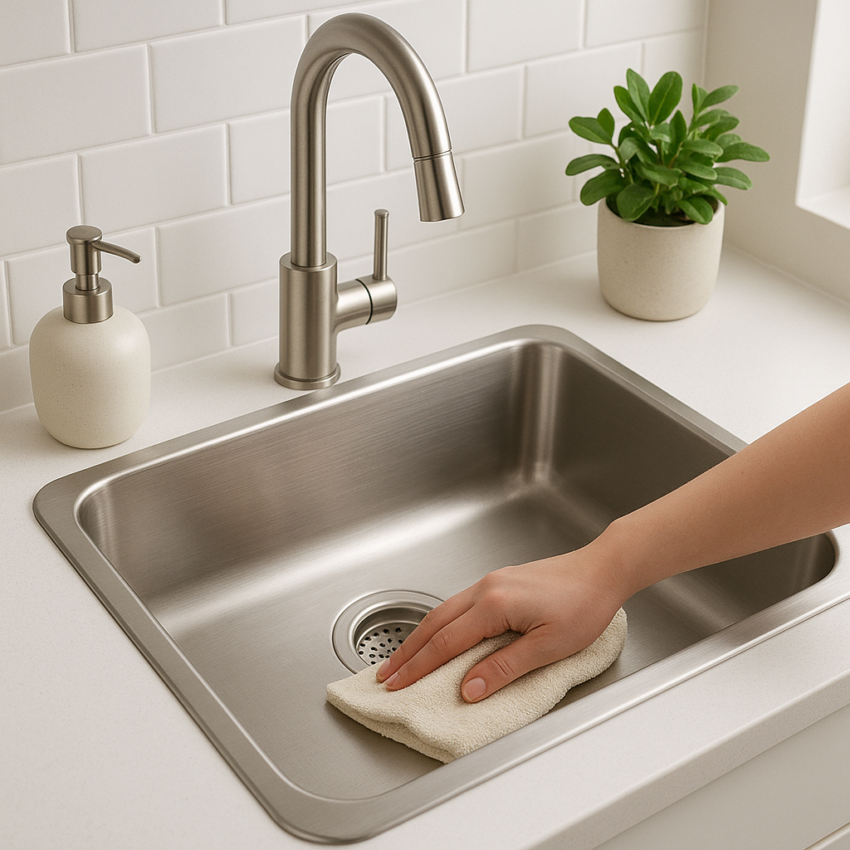
Maintaining the shine and cleanliness of your kitchen features, especially when learning how to clean stainless steel sink successfully, can elevate the entire aesthetic of your cooking space. Over time, despite regular use, grime, stains, and unsightly marks can obscure the brilliance of a stainless steel sink. This article will guide you through effective strategies to restore and maintain the lustrous surface of your stainless steel sink without hassle.
How to Clean Stainless Steel Sink: Essential Tools and Materials
The first step in properly maintaining your sink involves knowing the tools at your disposal. A simple, efficient cleaning routine can transform your daily kitchen upkeep. You’ll need:
- Soft cloth or sponge
- Baking soda
- White vinegar
- Lemon or olive oil
- Dish soap
- Old toothbrush
Step-by-Step Cleaning Guide
Follow these easy steps to ensure your stainless steel sink glows elegantly:
1. Basic Rinse and Soap Scrub
Begin by rinsing your sink with warm water to remove any loose debris. Apply a few drops of dish soap to a sponge and scrub the entire sink. Focus on the corners and hard-to-reach areas, using an old toothbrush if necessary.
2. Tackle Tough Stains with Baking Soda
After the initial wash, sprinkle baking soda over the surface. Baking soda gently exfoliates the surface of the steel without scratching, making it perfect for dealing with tough stains. For additional cleaning power, a paste of baking soda and water can be applied and left for a few minutes before scrubbing with a soft cloth.
3. Use Vinegar for Deeper Cleaning
Spray the sink with diluted vinegar to combat water spots and disinfect the surface. Vinegar will fizz when it reacts with baking soda, which is normal and aids in breaking down residues. Rinse thoroughly after the reaction finishes.
4. Rinse and Dry
Use lukewarm water to rinse away vinegar and baking soda remnants completely. It is crucial to dry the sink with a soft cloth afterward, as this prevents water spots and maintains the steel’s sheen.
5. Finish with a Shine
To achieve a professional finish, apply a few drops of olive oil or rub a slice of lemon over the steel to add luster and vibrancy. Buff gently with a dry cloth to accomplish a flawless, gleaming appearance.
Regular Maintenance Tips
Keeping your stainless steel sink spotless involves routine maintenance. Once you’ve mastered how to clean stainless steel sink effectively, consider these general upkeep tips:
- Wipe the sink dry after each use to prevent watermark formation.
- Avoid harsh cleaners; they can be abrasive and damaging over time.
- Use specialized stainless steel cleaner occasionally for a deep cleanse.
Home décor enthusiasts may also explore decorative kitchen-enhancements, adding character while ensuring functionality. Visit our guide on transcending trends like vintage map decor, perfectly blending practicality with style.
Troubleshooting Common Issues
Sometimes, additional measures might be required to combat persistent issues:
Dealing with Rust Spots
Though rare in stainless steel, rust can occur if your sink is not dried properly. For minor rust spots, a paste made of baking soda and water can be gently applied using a soft cloth. Avoid steel wool or metal brushes, as they could damage the finish.
Addressing Soap Scum and Mineral Deposits
If soap scum or mineral deposits become apparent, a soak in vinegar might be necessary. Let vinegar sit briefly on stubborn areas, then scrub with a sponge before rinsing and drying.
It’s essential to maintain regular cleaning habits not only to preserve aesthetics but also for health. Learn more about kitchen hygiene practices on this helpful resource on health and safety standards for a well-maintained kitchen environment.
- Maintain the finish by using gentle, natural cleaning solutions.
- Regular drying prevents oxidation and tarnishing.
- Natural oils and acids can restore shine without harsh chemicals.
- Monitor and address stubborn spots with non-abrasive methods.
Frequently Asked Questions
Can I use bleach to clean my stainless steel sink?
It is not recommended to use bleach as it can corrode and damage the finish of stainless steel. Opt for gentler alternatives like vinegar or baking soda.
What’s the best way to remove scratches from my stainless steel sink?
For minor scratches, a stainless steel scratch removal kit or a small amount of non-abrasive toothpaste can be used to gently buff out imperfections.
How often should I clean my stainless steel sink?
To reduce buildup and maintain hygiene, clean your sink with mild soap and water at least once a week. Dry your sink regularly after use.
Why is my stainless steel sink spotted and discolored?
Spots and discoloration often result from mineral deposits and soap residue. Keeping the surface dry and using vinegar occasionally can minimize these chances.
Can lemon juice damage my stainless steel sink?
Used sparingly, lemon juice is safe and can enhance shine while providing a pleasant scent. However, prolonged contact should be avoided to prevent potential pitting.
Mastering how to clean stainless steel sink surfaces effectively not only improves aesthetics but also promotes hygienic kitchen practices. By incorporating these essential tips into your cleaning routine, preserving your sink’s radiant look becomes a simpler, rewarding task.