How chemical over-reliance and broken ecosystems connect the windshield phenomenon” to sudden indoor parasite surges
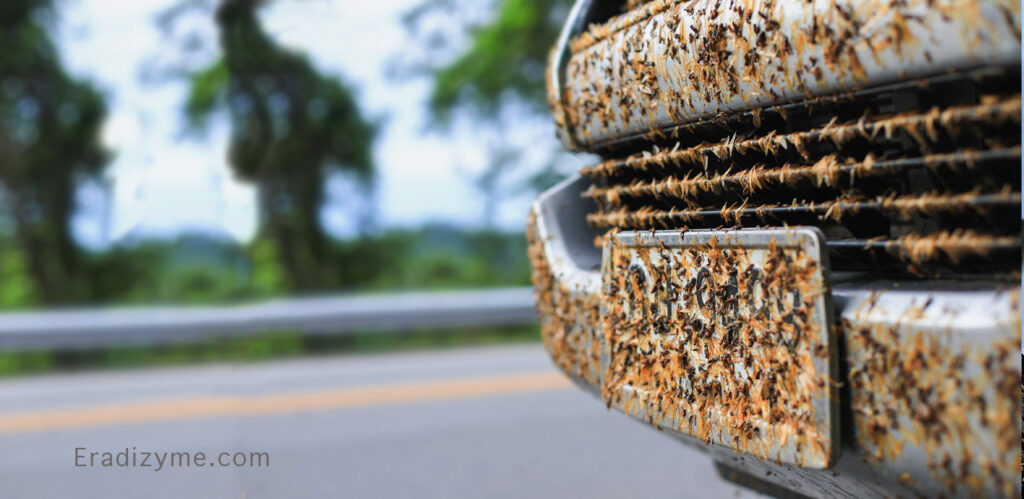
Have you ever wondered why long highway road trips look so different today than they did 25 years ago? Back then, driving a long distance left your car bumper and windshield completely covered in dead bugs, but today, your car remains bug-free. While this “windshield phenomenon” highlights a catastrophic, 80% drop in flying insect abundance, it masks a darker ecological reality driven by the massive over-spraying of toxic chemical pesticides.
This intense chemical saturation has triggered a collapse of foundational food webs and a steep decline in natural predators like birds and bats, removing nature’s biological shield and ultimately allowing a select group of destructive, crawling parasites to explode in number. Across the country, pest control agencies are reporting a massive surge in residential infestations of tropical rat mites, mouse mites, and bird mites.
The link between clean windshields and indoor mites is not a direct biological correlation, but rather two separate consequences of the exact same systemic issue: relying too heavily on toxic chemical treatments. The real culprit behind this terrifying uptick isn’t a lack of cleanliness, it is a direct consequence of a disrupted food web, our over-reliance on chemical fixes, and a breakdown of natural biological balances.
Case Study 1: Outdoor Ecosystem Collapse (The Windshield Phenomenon)
The Driver of Population Shifts: Historical Climate Cycles
To understand why these microscopic, blood-sucking mites are entering human bedrooms, it is necessary to look past the isolated, short-term data sets that dominate modern environmental discussions. Earth’s climate and ecosystems have undergone massive, natural variations since the beginning of time. Analyzing brief snippets of recent history ignores grand, historical climate cycles. These long-term oscillations are not characterized by linear warming, but rather by erratic volatility, including intense, record-breaking winter freezes and shifting regional microclimates.
The primary driver of the current pest explosion is not a uniform temperature rise, but rather the acute disruption of localized habitat balances and the natural food chain. Landmark environmental research reveals a vicious cycle: when natural predators decline, localized pest populations spiral out of control.
Tracking the Predator-Prey Balance
According to a comprehensive study published in the journal Science, North America has lost nearly 3 billion birds since 1970. This decline is steepest in agricultural and urban areas where chemical usage decimates the birds’ primary insect food source. A parallel collapse has hit wild bat populations, removing a primary biological shield that historically kept regional flying insect populations in check. Without these natural predators, localized pest populations surge, driving a heavy reliance on chemical applications.
These historical shifts in weather patterns, combined with modern urban infrastructure, alter animal behavior. Severe weather anomalies drive rodents into closer proximity with human structures, seeking shelter in crawlspaces, attics, and wall cavities.
Case Study 2: Indoor Habitat Disruption (Bird and Rodent Mite Surges)
How Outdoor Imbalance Moves Indoors
This outdoor collapse of natural biological shields triggers a direct chain reaction that pushes pests straight into human living spaces. When specialized insect-eating bird and bat populations dwindle due to chemical saturation, the baseline of local ecosystems fractures. Simultaneously, the broader decline of apex aerial predators, such as owls, hawks, and raptors, removes nature’s primary top-down check on wild rodent populations. Without these natural predators to keep them in balance, mouse and rat numbers surge exponentially around residential properties.
This overpopulation crisis collides catastrophically with volatile, modern climate anomalies. When unseasonal freezes or severe weather patterns strike, these over-abundant rodent populations are physically driven to seek immediate shelter, leading them to breach exterior boundaries and nest inside crawlspaces, attics, and wall cavities. As homeowners respond to this indoor influx by flooding their properties with toxic chemical baits and rodenticides, they inadvertently set off a secondary parasite crisis inside their own walls.
The Host-Collapse Migration Mechanism
While bird mite problems often flare up when active or abandoned bird nests are left on windowsills, eaves, or gutters, the vast majority of modern household invasions stem from this distinct rodent source. The ultimate trigger for these home invasions is a phenomenon known as the host-collapse migration.
In a balanced system, mites stay on their specific hosts, such as the tropical rat mite feeding on wild rodents within nesting spaces. However, when humans respond to urban rodent surges by deploying heavy doses of toxic chemical baits, the natural loop breaks. A landmark public health study published in Science by the University of Chicago Harris School of Public Policy illustrates the severe societal costs, showing that when natural predators like bats and birds decline, human reliance on chemical pesticides spikes by 31.1%, leading to measurable increases in environmental toxicity.
In a residential setting, this over-reliance plays out catastrophically. Rodenticides successfully kill the target rat or mouse hidden deep inside a crawlspace, but leave the thousands of parasites living on its body completely unharmed. Within hours of the host’s body cooling, tens of thousands of starving rodent mites abandon the carcass. Lacking their primary host, they launch a desperate, mass migration out of the walls, moving through electrical conduits, air vents, and light fixtures into people’s bedrooms. Because bird mites share an almost identical behavior pattern when an avian host abandons a nest, the resulting invasion is equally severe.
Moving Beyond Localized Chemicals to Systemic Solutions
Breaking the Cycle with Bio-Enzymatic Solutions
The rise of rodent mites and bird mites proves that we cannot isolate chemical fixes. Traditional spraying of volatile synthetic poisons often backfires, as pests develop rapid genetic resistance. To effectively break this cycle without adding toxic loads to the home, modern integrated pest management focuses on non-toxic, bio-enzymatic solutions.
Rather than attempting to poison the nervous system of the insect, these advanced formulas utilize targeted enzymes to trigger enzymatic hydrolysis. This mechanism naturally dissolves the outer waxy matrix and protein-chitin exoskeleton of the mites, destroying their structural integrity. Because the breakdown is completely physical rather than chemical, target pests cannot develop genetic resistance to it. This structural approach makes bio-enzymatic options like Eradizyme a highly viable alternative for sensitive home environments.
Environmental Protocols for Mite Eradication
Furthermore, resolving a severe infestation requires a total shift in strategy. The Head Researcher at Eradizyme.com notes that for a biting rodent or bird mite problem, families must allocate roughly 90% of their overall effort to treating the environment and only 10% to the body. While bathing in Eradizyme can provide temporary relief and a quick escape from the constant biting and stinging, lasting eradication requires a rigorous daily protocol.
This involves physical spraying and vacuuming of resting areas like beds, sofas, and recliner chairs, in other words, all the areas where you spend most of your time, to systematically eliminate newly emerging larvae and break the 7-to-10-day reproductive cycle.
Clean windshields are not a sign of a healthier world; they are a warning. Addressing pest issues effectively requires understanding broader environmental disruptions rather than simply applying more localized chemicals. Until we address the structural root causes of pest control, by sealing our homes, abandoning synthetic over reliance, and utilizing biological ecosystem tools, the consequences of disrupted environments will continue to crawl right into our beds.
About the Author:
The Eradizyme Head Researcher focuses on home defense and eco-friendly pest protocols, helping families implement non-toxic, science-backed strategies to handle environmental bird mite and rodent mite migrations.