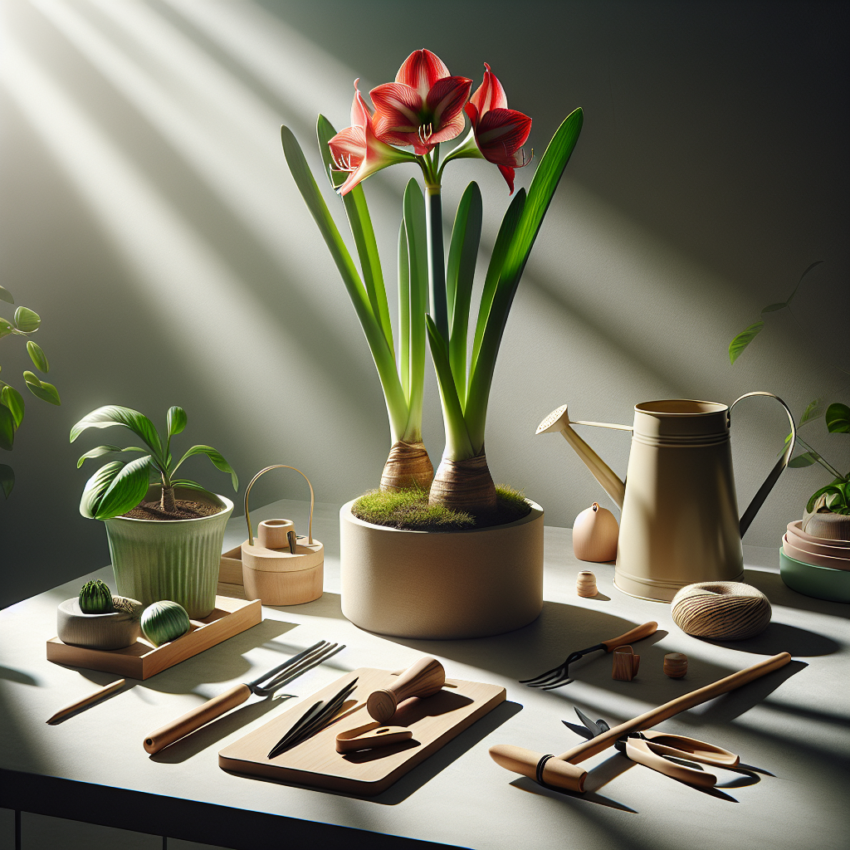
Amaryllis care is a popular topic among gardening enthusiasts, thanks to its beautiful and vibrant blooms that add a splash of color to any indoor garden. Whether you’re a seasoned gardener or a beginner looking to enrich your home environment, understanding the right care for amaryllis can make a significant difference in their health and longevity. Here, we’ll explore essential tips and best practices that ensure your amaryllis plants thrive, offering you a floral display that will be the envy of any plant lover.
Optimal Conditions for Amaryllis Care
To successfully nurture an amaryllis, it’s crucial to replicate its native environment as closely as possible. Amaryllis bulbs naturally thrive in warm and indirect sunlight. Place the plants near a window where they can enjoy bright but filtered light. Keep an eye on the room temperature, ideally maintaining it between 65°F and 75°F. Excessive cold or heat can cause stress to the plant, affecting its growth process.
Watering Your Amaryllis
Water plays a pivotal role in amaryllis care, as it needs an ideal amount to flourish without risking bulb rot. Always start with a well-drained pot; ensure that excess water can freely escape. During the growing period, water the plant thoroughly but allow the top two inches of soil to dry out before re-watering. Over-watering is a common mistake; protecting the healthy roots by maintaining a balance is key.
For a broader perspective on irrigation principles that can be applied to houseplants like amaryllis, consider exploring our comprehensive guide to irrigation installation systems.
Feeding and Fertilizing
Proper feeding encourages a healthy bloom cycle. Using a balanced liquid fertilizer every 2-4 weeks during the growing season can significantly benefit amaryllis plants. Choose a fertilizer appropriate for flowering plants, applying it at half strength to prevent any adverse effects. Once blossoms appear, you can decrease feeding, as excessive nutrients at this stage can hamper flower quality.
Post-Bloom Care
After the blooming period, effective post-bloom care is essential in preparing the bulb for the next growing cycle. Trim back the flower stalks to about 1-2 inches above the bulb but keep the leaves intact. These leaves will continue photosynthesis, storing energy back into the bulb for future blooms. Continue providing indirect light and regular water until the foliage naturally dies back toward the end of summer.
Storing and Resting Bulbs
Once the leaves turn yellow and wither, reduce watering and allow the soil to dry. Store the bulbs in a cool, dark place for at least 8-10 weeks. This dormant period is critical for rejuvenating the amaryllis for another spectacular bloom. As the rest period concludes, bring the bulbs into light and warmth, resuming regular care practices to encourage new growth.
Common Challenges and Solutions in Amaryllis Care
Amaryllis plants, while resilient, may face challenges like pest infestations or fungal conditions. Red spider mites and aphids are common issues but can be managed with neem oil or insecticidal soap. For fungus-related problems, ensure good air circulation and avoid waterlogged conditions.
For detailed information on how pests and diseases can affect plant care, the Wikipedia page on plant pathology offers a comprehensive resource worth consulting.
Reviving Struggling Amaryllis
Should your amaryllis show signs of distress, such as yellowing leaves or stunted growth, evaluate environmental factors first. Adjust lighting, water, and feeding routines as necessary. In some cases, relocating the plant to a new location with optimal light and temperature can make a significant difference.
Soil health is another critical factor in plant revival. Repotting in fresh, high-quality potting mix in a well-draining container can invigorate struggling plants, giving them the best chance to recover and thrive.
Final Thoughts on Amaryllis Care
Mastering amaryllis care can be rewarding, offering beautiful blooms and a sense of accomplishment. With attention to their specific light, water, and nutrient requirements, your amaryllis can become a year-round delight in your home or garden. By implementing the tips outlined in this article, you’ll be well on your way to nurturing these magnificent plants for many cycles to come.
- Amaryllis blossoms thrive in indirect light and ideal temperature settings.
- Proper watering with well-draining soil prevents root issues.
- Regular feeding is crucial during the growing season for healthy blooms.
- Post-bloom care prepares plants for future growth.
- Managing pests and conditions ensures plant resilience and vibrancy.
What is the ideal lighting condition for amaryllis plants?
Amaryllis thrives in bright but indirect sunlight, ideal for its growing environment. Positioning the plant near a moderately sunlit window can enhance its growth without exposing it to harsh direct rays, which could cause leaf burn.
How often should I water my amaryllis?
During the growing phase, water your amaryllis deeply but allow the topsoil to dry out before each session. This practice helps maintain the plant’s well-being and prevents root rot caused by overwatering.
Why are the leaves of my amaryllis turning yellow?
Yellowing leaves can be due to several factors, including overwatering, insufficient light, or natural aging as the plant cycles through growth stages. Adjust care parameters to determine the cause and remedy the situation.
Can I propagate my amaryllis at home?
Yes, amaryllis can be propagated by separating offsets, also known as bulbs, from the parent plant. Once removed, each offset should be planted in its own pot and given standard care for the best results.
What should I do during the amaryllis dormancy period?
Once blooming ceases and leaves fade, allow the plant to enter a dormancy period by reducing water and placing the bulb in a cool, dark space for a few weeks. This rest phase is vital for reinvigorating the bulb for subsequent flowering seasons.