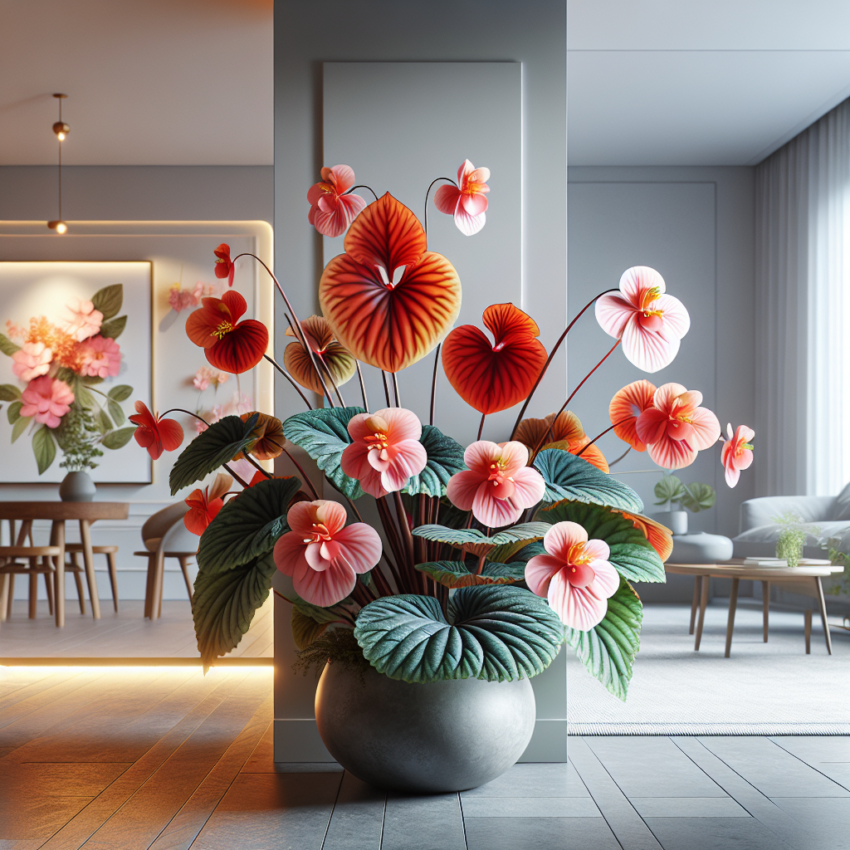
Transforming your home or office with plants can significantly enhance its aesthetic appeal and atmosphere. One plant that stands out with its unique appearance and charm is the angel wing begonia. Known for its striking foliage and ease of care, this plant has become a favorite among plant enthusiasts looking to add a touch of nature to their spaces.
Caring for Angel Wing Begonias
The angel wing begonia is a tropical plant that thrives in indoor environments. When planning to grow an angel wing begonia plant, it’s essential to consider its light requirements, watering needs, and temperature preferences.
Light Requirements
Angel wing begonias prefer bright, indirect light. Too much direct sunlight can scorch their leaves, while insufficient light can hinder flowering. Place the plant near a window where it can receive filtered light for optimal growth.
Watering Needs
These plants favor consistently moist soil without becoming waterlogged. It’s vital to water them when the top inch of soil feels dry to the touch. Be cautious of overwatering, which can lead to root rot.
Temperature and Humidity
Angel wing begonias flourish in temperatures between 65°F and 75°F. They appreciate higher humidity levels, so consider misting your plant regularly or placing it on a humidity tray, especially in drier climates.
Decorating with Angel Wing Begonia
Incorporating an angel wing begonia plant into your home or office décor can bring a vibrant and elegant touch. Their asymmetrical leaves and clusters of colorful flowers make them a stunning focal point.
Placement Ideas
Here are some ideas for displaying your angel wing begonia:
- Place it on a windowsill with filtered sunlight.
- Use a decorative plant stand to elevate its beauty.
- Combine it with other houseplants for a lush indoor garden effect.
Health Benefits of Houseplants
While houseplants like the angel wing begonia primarily enhance beauty, they also offer several health benefits. They can improve air quality and promote a sense of calm and relaxation.
Air Purification
Plants like the angel wing begonia help filter indoor air pollutants, providing cleaner oxygen which may contribute to improved health. Improved air quality is linked to better sleep and increased focus.
Mental Well-being
The presence of plants in indoor spaces has been shown to reduce stress levels and enhance mood. Caring for plants encourages mindfulness and can be a rewarding hobby.
For tips on maintaining a comfortable environment for all your household members, you can check out our article on effective pet care.
In Conclusion
Bringing an angel wing begonia into your home transforms spaces with its vivid colors and lush foliage. This beautiful plant is easy to care for and offers both aesthetic and health benefits, making it a perfect addition to any plant collection.
- Angel wing begonias thrive in bright, indirect light.
- Regular watering while avoiding waterlogging is crucial.
- High humidity levels enhance their growth and appearance.
- They contribute to improved indoor air quality.
- These plants can enhance mental well-being and reduce stress.
What kind of light is best for angel wing begonias?
Angel wing begonias prefer bright, indirect light. Direct sunlight can damage the leaves, so filtered light through a curtain or positioning slightly away from a direct window is ideal.
How often should I water my angel wing begonia?
Water when the top inch of the soil feels dry. Be cautious not to overwater as this can lead to root rot. The goal is to maintain consistently moist soil without it becoming soggy.
Can I keep my angel wing begonia outside?
These plants can be kept outside in warm climates with adequate humidity. However, ensure they are protected from direct sunlight and drafts, which can harm the plant.
Do angel wing begonias bloom?
Yes, with the right conditions, angel wing begonias produce clusters of flowers. They typically bloom throughout the growing season, offering additional color and interest.
What are common issues with angel wing begonias?
Common issues include leaf drop due to overwatering or insufficient light and leaf scorch from too much direct sunlight. Monitor the plant’s conditions and adjust care accordingly.
To learn more about houseplants and their benefits, visit Wikipedia’s houseplant page.