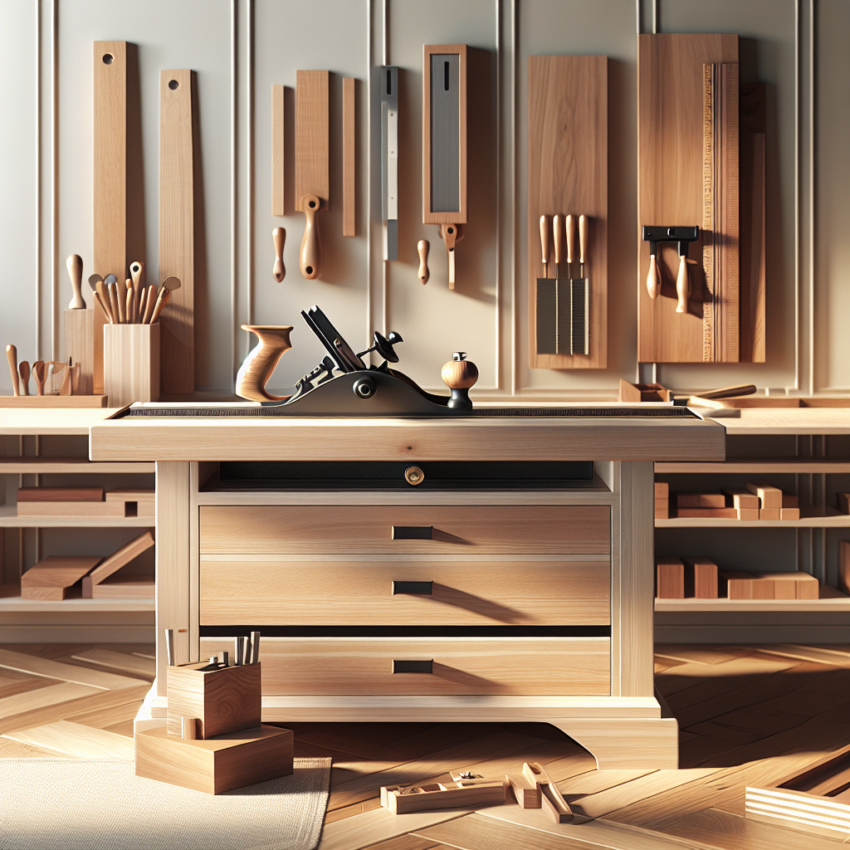
For woodworking enthusiasts, the quest to refine skills often leads to discovering invaluable tools. One such tool is the hand bench planer, a staple for any woodworker aiming to achieve precise, smooth surfaces and tailored finishes. Whether you are a seasoned artisan or a novice eager to learn, understanding the nuances of bench planers can significantly enhance your craftsmanship.
Mastering the Hand Bench Planer
The hand bench planer is more than just a tool; it’s an extension of your hand that shapes and perfects woodwork. Often seen as a tool of precision, it allows users to smooth surfaces, create grooves, and adjust thickness. This tool provides not only functionality but a level of control that electric planers may not. Understanding how to choose and use a hand bench planer effectively can elevate your woodworking projects to new heights.
Choosing the Right Hand Bench Planer
Selecting the right hand bench planer depends on the specific needs of your project. Consider the type of wood you will be working with and the kind of finish you desire. A high-quality bench planer should have a sturdy construction, a comfortable handle, and sharp blades. Additionally, the weight and size of the planer are crucial for maneuverability and ease of use. A well-balanced design ensures precision and reduces fatigue during prolonged use.
The Art of Planing
Proper planing technique is essential for optimal results. Begin by setting the blade to the desired depth, ensuring it’s sharp enough to make clean, even shavings. Position the planer at a slight angle, applying equal pressure across the tool while moving swiftly in the direction of the wood grain. Regularly check your progress to maintain an even surface.
Maintaining Your Planer
To preserve the life and effectiveness of your bench planer, regular maintenance is necessary. Clean the tool after each use, removing all wood shavings and dust. Sharpening the blades regularly keeps the cuts smooth and precise. Check for any loose components and tighten them to maintain structural integrity. Proper storage in a dry, safe area can also prevent rust and wear.
Benefits and Applications
Using a hand bench planer can transform your woodworking experience. It allows for fine-tuning of the wood surface, achieving a finish that is both unique and professional. From crafting furniture to producing intricate wood moldings, the applications of a bench planer are numerous. Whether you’re smoothing out imperfections or creating beveled edges, this tool’s versatility is unmatched.
Learning and Adapting Techniques
Continuously refining your technique is crucial for mastery. Experiment with different woods and settings to understand the full capabilities of your hand bench planer. Engage with online communities and educational resources to stay updated with the latest innovations and techniques. Such involvement not only broadens your skill set but also enhances your ability to tackle diverse woodworking challenges.
Advanced Tips and Tricks
For more advanced users, utilizing custom blades and jigs can expand the functionality of your hand bench planer. These accessories enable more complex designs and finishes, adding a personalized touch to your projects. Additionally, understanding the grain patterns of the wood can provide insights into optimizing the planer’s performance.
To learn more about effective techniques in other disciplines such as woodworking ergonomics or health-friendly practices, check out the article on giving your pet the best life possible.
Conclusion
Incorporating a hand bench planer into your toolkit can significantly improve your woodworking outcomes. By selecting the right planer, mastering its use, and keeping it well-maintained, you set the stage for successful, beautiful projects. Embrace the journey of improving your skills, and soon, you’ll achieve results that truly showcase your craftsmanship.
- Hand bench planers are essential for precision and smoothness in woodworking.
- Selecting the right tool is vital for effective use and high-quality results.
- Proper technique and maintenance enhance the longevity and performance of your planer.
- Advanced tips can help expand the tool’s capabilities for unique projects.
- Continuous learning is key to mastering woodworking tools.
What is a hand bench planer used for?
A hand bench planer is used for smoothing wood surfaces, creating level edges, and adjusting thickness, aiding in the creation of finely finished woodworking projects.
How do I maintain a hand bench planer?
To maintain a hand bench planer, clean it after each use, keep the blades sharp, check for loose components, and store it safely to prevent rust.
Is a hand bench planer better than an electric planer?
A hand bench planer offers greater control and precision, while an electric planer is faster and better for larger workpieces. The choice depends on the specific needs of the project.
Can I use a hand bench planer on all types of wood?
Yes, but the technique and planer settings may need to be adjusted depending on the wood type to achieve the best results.
Where can I learn more about woodworking tools?
Visiting credible educational websites and engaging in woodworking forums can offer valuable insights and knowledge. For general information on tools, you can visit resources such as Wikipedia.