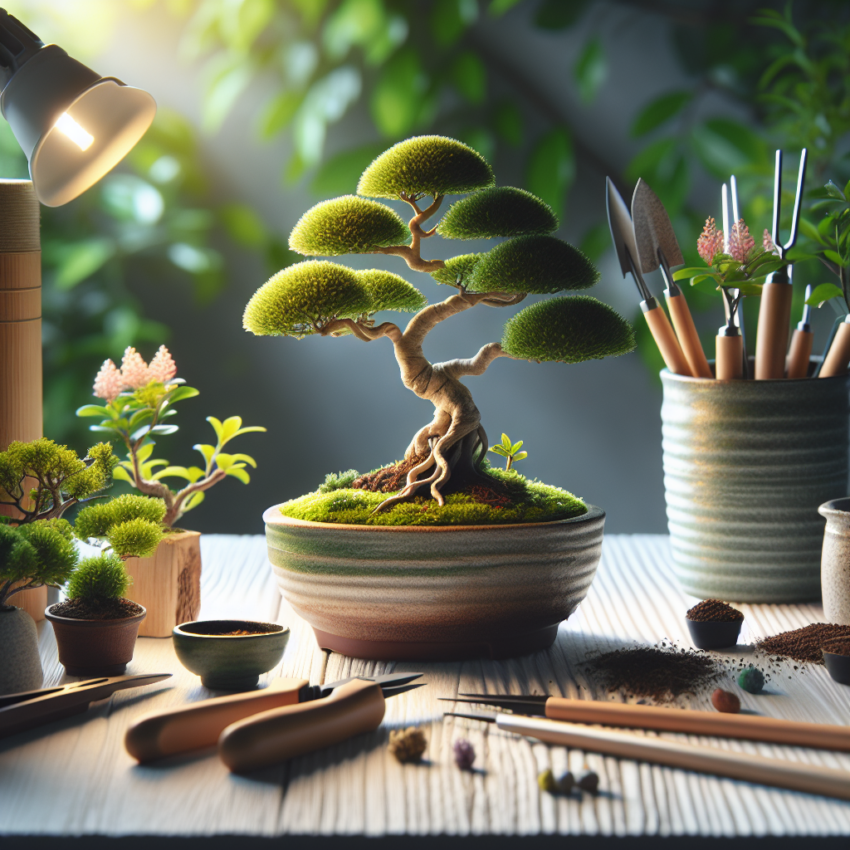
For those with a keen interest in bonsai tree care, understanding the unique requirements and commitment needed can greatly enhance your experience with these captivating miniature gardens. Whether you are just starting your bonsai journey or looking to refine your techniques, this guide will provide valuable insights into nurturing these delicate trees.
Bonsai Tree Care Fundamentals
Bonsai trees are not just miniature versions of trees but symbolize a living art form that demands attention and patience. Let’s delve into the essential aspects of bonsai tree care to ensure your bonsai thrives.
Choosing the Right Bonsai Tree
The first step in bonsai tree care is choosing the right species based on your environment and expertise. For beginners, species such as Ficus, Chinese Elm, and Juniper are great options due to their resilience and adaptability.
Watering Your Bonsai
Watering is crucial in bonsai tree care and cannot be understated. Bonsai trees typically require more frequent watering than regular potted plants. The rule of thumb is to check the soil moisture daily and water when it begins to dry out, ensuring it never becomes soggy. Over-watering can lead to root rot, so it’s essential to find a balance.
Pruning Techniques
Pruning is both an art and a science in bonsai tree care. It not only helps maintain the miniature size but also the desired form. Regular pruning of branches, leaves, and roots is necessary to maintain health and aesthetic. Use sharp, sterile tools and apply a wound sealant if needed to prevent infection.
Understanding Light Requirements
Light is a critical element in bonsai tree care, affecting growth and vitality. Most bonsai species thrive in bright, indirect sunlight. Too much direct sunlight may scorch the leaves, while too little can stunt growth. Observing your bonsai’s response can help you adjust its placement.
Fertilizing for Healthy Growth
Fertilizing provides essential nutrients that might be absent in the limited soil of a bonsai pot. Use a balanced fertilizer during the growing season, adjusting the frequency based on your bonsai species and environmental conditions. Organic options are preferred to avoid chemical build-up in the soil.
How Do You Care for a Bonsai?
Understanding how do you care for a bonsai requires a commitment to ongoing learning and observation. Each species of bonsai has unique needs, and recognizing these will improve your ability to provide optimal care.
Repotting Your Bonsai
Repotting is a critical procedure in bonsai tree care to prevent root-bound conditions and refresh the soil. Typically, bonsai trees are repotted every two to five years, depending on their species and growth rate. This process encourages healthy root development and provides room for new growth.
Seasonal Care and Adjustment
Seasonal changes demand specific bonsai tree care adjustments. In winter, some species may require dormancy, while others need to be moved indoors. In contrast, summer may require more frequent watering and shading from intense midday sun. Understanding the species-specific seasonal care is crucial for a sustainable bonsai practice.
For those interested in enhancing their bonsai tree care knowledge, studying related fields such as environmental factors and the impact of local climate can be beneficial.
Dealing with Pests and Diseases
Pests and diseases are common challenges in bonsai tree care. Keeping a consistent routine of cleaning leaves and observing signs of distress early on can mitigate these issues. Using natural pest control solutions like neem oil can prevent chemical damage to the delicate ecosystem.
For further understanding, external resources provide comprehensive details about bonsai practices. For example, the article on Wikipedia’s page on Bonsai offers historical perspectives and advanced techniques that can broaden your approach.
In conclusion, mastering bonsai tree care is a continuous journey of observation, practice, and patience. Each bonsai is a living piece of art, requiring care that reflects its delicate balance between nature and nurture.
- Bonsai tree care involves light, soil, water, and regular pruning.
- Choosing the right species can make care more manageable.
- Observation and adaptation to environmental changes are critical.
- Seasonal adjustments and pest control are vital for a healthy bonsai.
- External resources provide expanded knowledge and inspiration.
What is the best bonsai tree for beginners?
Ficus and Chinese Elm are ideal for beginners due to their hardiness and adaptability to various care conditions.
How often should I water my bonsai tree?
Water your bonsai when the topsoil feels dry to the touch. Frequency will vary depending on species, pot size, and climate.
Can bonsai trees be kept indoors?
Yes, some species like Ficus and Jade thrive indoors if they receive adequate light and temperature conditions are controlled.
What kind of soil is best for bonsai trees?
Bonsai soil should allow for proper drainage and aeration. A mix of akadama, pumice, and lava rock is commonly used.
How do I shape my bonsai tree?
Pruning and wiring are techniques used to shape bonsai trees. Care should be taken with each technique to avoid damaging the tree.