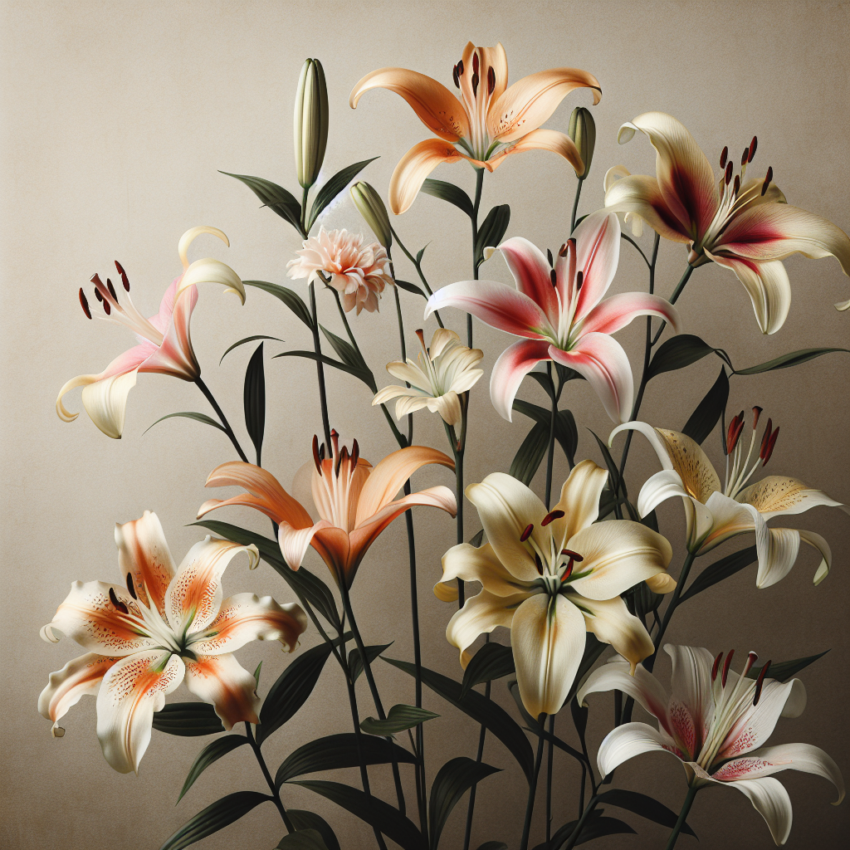
When exploring the garden world, one can’t overlook the allure and charm of the various types of lilies. Known for their elegance and diverse range of shapes and colors, lilies have captured the hearts of garden enthusiasts and florists alike. As you venture into understanding the types of lilies, you’ll discover a plant family rich in variety and adaptability, thriving in gardens across the globe.
Understanding the Types of Lilies
Lilies belong to the genus Lilium and are cherished worldwide for their beauty and symbolic meanings. These flowering plants are native to the temperate regions of the Northern Hemisphere and have become popular in gardens for their ornamental value. While there are many species, the primary categories can be broken down into nine divisions, according to the Royal Horticultural Society. Each group embraces unique characteristics and growing conditions that contribute to the diversity and beauty of lilies.
Asiatic Lilies
Asiatic lilies are among the most popular and widely grown lilies due to their adaptable nature and vibrant colors. These lilies bloom early in the summer, offering an array of hues including red, orange, yellow, pink, and white. Asiatic lilies are known for their resilience and ability to thrive in a variety of climates. They do not have a strong fragrance, making them perfect for cut flower arrangements used indoors. Their ease of growth and lack of fragrance make them a favorite among gardeners seeking low-maintenance beauty.
Oriental Lilies
Oriental lilies are admired for their large, fragrant blossoms and later blooming period compared to Asiatic lilies. These lilies thrive well in slightly acidic soil and appreciate well-drained conditions. Their bold and striking flowers often come in white, pink, and purplish-red colors, adorned with striking markings and edges. They are well-loved for their sweet scent, which can perfume an entire room. Oriental lilies bring elegance and scent to any garden or floral arrangement.
Trumpet Lilies
Known for their tall stems and uniquely shaped flowers, trumpet lilies are another delightful addition to the lily family. They showcase large, trumpet-shaped blooms that can be as much as six inches long. These lilies often emit a captivating fragrance that intensifies during the evening. Showcasing shades of white, cream, yellow, and pink, trumpet lilies make a powerful statement in any garden. Their standout appearance and delightful aroma enhance the quality of their environment, attracting visitors and pollinators alike.
Martagon Lilies
Martagon lilies are unique for their delicate, recurved petals and whorled leaves. Commonly referred to as ‘Turk’s Cap’ lilies, they add a whimsical charm to any garden. These lilies thrive in cooler climates and shaded positions, making them suitable for woodland gardens. Their flowers are typically available in shades of purple, pink, white, and yellow, often speckled with darker spots. As Martagon lilies are slow to establish, patience and persistence eventually reward gardeners with an enchanting floral display.
Tiger Lilies
Tiger lilies are easily recognizable by their bright orange petals adorned with darker speckles or stripes. Known scientifically as Lilium lancifolium, these lilies have a wild, exotic appearance that adds character to garden spaces. Growing well in full sun and tolerating various soil types, tiger lilies are a robust choice for gardeners seeking vibrant color and minimal maintenance. They also hold cultural significance in some regions, symbolizing wealth and prosperity.
Other Types of Lilies
Beyond the popular categories mentioned above, the vast world of lilies includes many other intriguing types. For instance, Turk’s Cap lilies, Madonna lilies, and various hybrid lilies each offer distinct visual and sensory experiences. The Lilium genus extends into literally hundreds of species and hybrids, providing endless possibilities for gardeners and flower enthusiasts to explore.
Caring for Different Types of Lilies
Successful cultivation of lilies hinges on understanding their specific care requirements. Regardless of the type, all lilies prefer well-drained soil and benefit from fertile conditions enriched with organic matter. Sun exposure varies among types, with some thriving in full sun and others preferring partial shade. Regular watering and mulching help maintain soil moisture and temperature, promoting healthy growth. In addition, deadheading spent blooms can encourage further flowering and maintain the plant’s aesthetic.
The Beauty and Symbolism of Lilies
Lilies hold a deep-rooted symbolism, often representing purity, transience, and renewal. This rich symbolism varies across cultures and contexts, adding depth to their aesthetic appeal. Varied interpretations make lilies popular in floral arrangements for weddings, funerals, and religious ceremonies. Their beauty is not only in their visual appeal but also in the stories and traditions they represent.
To explore the full spectrum of lily types and care, the horticultural community offers a wealth of resources and opportunities for learning. Whether you are a novice gardener or a seasoned horticulturist, there’s always more to discover about these enchanting flowers. To learn more about different species and growing methods, you can visit this informative resource.
Conclusion
With so many types of lilies available, there’s a perfect variety for every garden and floral display. From the robust and colorful Asiatic lilies to the fragrant Oriental and Trumpet lilies, each type brings its distinct beauty and charm. Understanding these differences enhances our appreciation and ability to care for them, enabling us to enjoy their splendor fully. Whether cultivating lilies in your garden or choosing them for an arrangement, these flowers bring undeniable beauty and grace.
- Lilies are popular due to their diverse colors and shapes.
- Different types of lilies have specific growing conditions and care requirements.
- Lilies have rich symbolism in various cultures, often representing purity and renewal.
- Proper care enhances their beauty and prolongs their blooming season.
- Learning about lilies can enrich both gardening and floral arranging experiences.
What are the main types of lilies?
The primary types of lilies include Asiatic, Oriental, Trumpet, Martagon, and Tiger lilies, each offering unique characteristics in terms of color, shape, and fragrance.
Which lilies are best for fragrant bouquets?
Oriental and trumpet lilies are known for their strong, captivating fragrance, making them ideal for creating aromatic floral arrangements.
How do I care for lilies in my garden?
Lilies require well-drained soil, regular watering, and adequate sunlight. Different types have varying sun tolerance, so consider individual needs when planting. Mulching and deadheading also enhance their growth and blooming potential.
Can lilies grow in shaded areas?
Yes, certain types of lilies, such as Martagon lilies, can thrive in shaded or partially shaded environments, making them suitable for cooler climates and woodland garden areas.
Are lilies safe for pets?
Lilies can be toxic to pets, particularly cats, if ingested. It’s essential to keep them out of reach from household animals to avoid potential health issues. Consulting a veterinarian is advisable if any concerns arise.