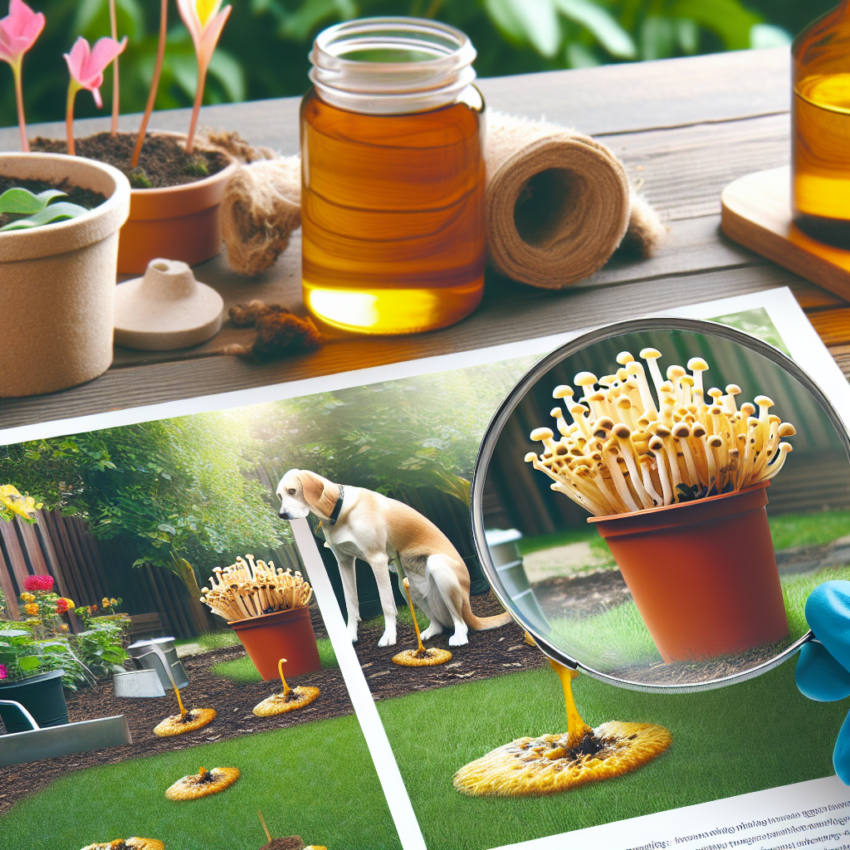
If you’ve recently noticed a curious, yellowish blob in your garden that looks eerily like something you might rather expect on your kitchen floor after an unfortunate canine encounter, you are not alone. This peculiar and unsightly presence is known as dog vomit fungus. Despite its rather alarming name and appearance, dog vomit fungus is not particularly harmful. It often raises questions due to its unconventional looks and unusual growth habits. In this piece, we’ll explore what exactly dog vomit fungus is, how it impacts your garden, and what you can do if you spot it.
Understanding Dog Vomit Fungus
Dog vomit fungus is a type of slime mold scientifically known as Fuligo septica. It typically manifests in garden mulch or other damp organic materials. When conditions are right, you might notice a foamy, yellow mass that can resemble scrambled eggs—hence the unattractive moniker. This slime mold thrives in warm, moist environments, making gardens an ideal spot for it to flourish. While not generally hazardous, its appearance can be unsettling to gardeners and homeowners.
The Lifecycle of Dog Vomit Fungus
Understanding the lifecycle of dog vomit fungus can shed light on how it appears so abruptly and in substantial amounts. This organism begins as tiny, single-celled amoeboid creatures that merge together to form the larger, more recognizable structure. In its plasmodial phase, it appears as a gelatinous mass, moving slowly in search of bacteria, spores, and other organic material as food. As it feeds and grows, it transforms into the conspicuous spore-producing structure we recognize as dog vomit fungus.
Impact on Your Garden
While startling, the presence of dog vomit fungus in your garden is not necessarily a cause for alarm. Unlike pathogenic fungi, it does not cause diseases to plants or animals. Instead, it actively participates in the ecosystem by breaking down organic material, helping to enrich the soil. Rather than being a destructive presence, it actually contributes positively by recycling nutrients.
However, some gardeners find it to be less than aesthetically pleasing. Fortunately, it can often simply be raked or washed away with a garden hose if its appearance is undesired.
Management and Control
If dog vomit fungus becomes a recurring presence in your garden, there are steps you can take to manage it. The most effective approach includes altering the environment to make it less hospitable for slime molds. This could involve adjusting your garden’s watering schedule to reduce excess moisture, as well as turning or aerating mulch regularly to enhance drying. Avoid over-mulching, as thick layers retain moisture and provide a prime breeding ground for fungi.
For those seeking more detailed strategies, our guide on effective garden management provides additional insights into maintaining a healthy environment for your plants.
It is also reassuring to know that dog vomit fungus does not pose a risk to your pets or children, making it a mostly benign, if startling, resident of your outdoor spaces.
Embracing the Diversity of Nature
Observing dog vomit fungus might be an unexpected twist in your gardening journey, but it serves as a reminder of the extraordinary diversity and resilience of life. Even fungi like Fuligo septica, with their quirky charm, play essential roles in the ecological tapestry. They are fascinating examples of the adaptability of life, capable of thriving in conditions that challenge other organisms.
Dog vomit fungus, while unsettling to some, is a testament to nature’s capacity for variety and the subtle intricacies often unnoticed in our daily environment. Embracing these elements can deepen our appreciation for the complex interrelationships that sustain life on our planet.
For more information about the biology and ecology of slime molds, you can explore resources like this comprehensive article on Wikipedia.
Next time you see dog vomit fungus, instead of reaching for the garden hoe immediately, take a moment to marvel at its unique and colorful contribution to the biodiversity of your garden. It’s merely nature’s way of helping maintain the balance.
- Dog vomit fungus, or Fuligo septica, is a type of slime mold found in damp, organic materials.
- It plays a beneficial role in ecosystems by decomposing organic matter.
- Though startling in appearance, it poses no harm to plants, humans, or pets.
- Managing garden moisture and reducing mulch density can help control its growth.
- Embrace these fungi as a fascinating part of nature’s diversity.
What exactly is dog vomit fungus?
Dog vomit fungus, scientifically known as Fuligo septica, is a type of slime mold that forms a yellow, foamy mass on mulch and other organic materials in gardens.
Is dog vomit fungus harmful to humans or pets?
No, dog vomit fungus is not harmful to humans or pets. It primarily feeds on decomposing organic matter and poses no direct threat.
How can I remove dog vomit fungus from my garden?
You can remove dog vomit fungus by raking it up or using a garden hose to rinse it away. Altering garden conditions to reduce moisture can help prevent recurrence.
Does dog vomit fungus affect plant health?
Dog vomit fungus does not affect plant health negatively. It contributes to nutrient recycling by breaking down organic matter in the soil.
Why is dog vomit fungus found in my garden?
Dog vomit fungus thrives in warm, moist conditions, making it common in gardens with ample mulch or decaying organic material.