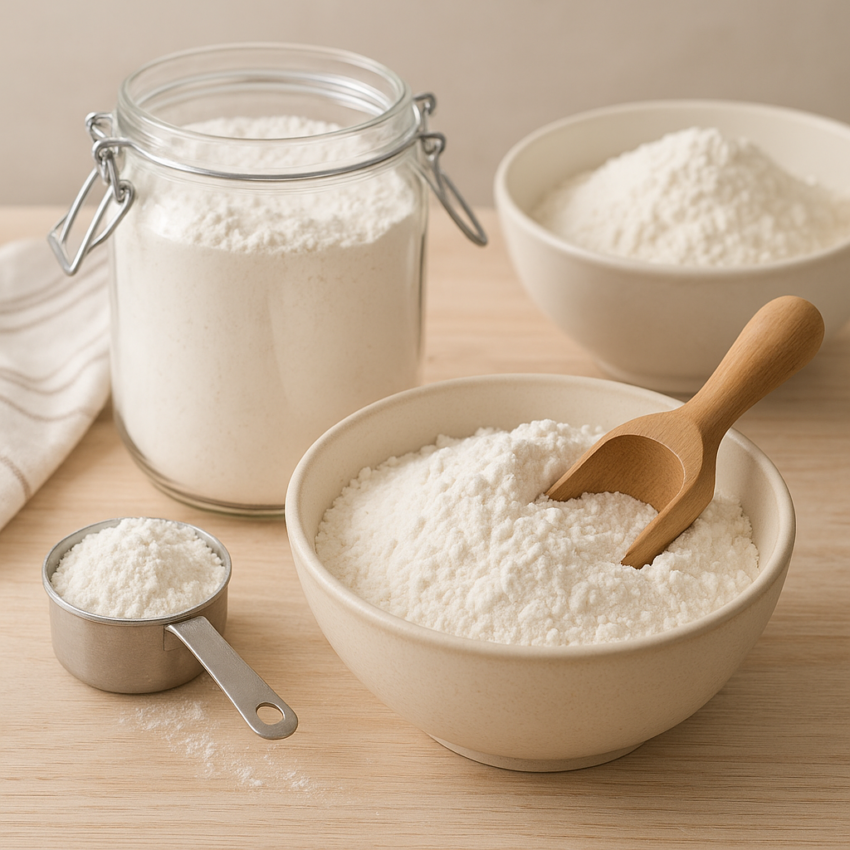
For those passionate about baking, understanding how to make self rising flour is an essential skill. Self-rising flour is a convenience ingredient widely used in various recipes. It simplifies baking by combining flour, baking powder, and salt in one mix. Making your own self-rising flour at home allows for flexibility, cost efficiency, and control over your ingredients. Whether you’re in the middle of a recipe and realize you’re out of this staple, or you simply prefer the personal touch, mastering this simple technique can elevate your baking projects.
How to Make Self-Rising Flour
Creating self-rising flour at home requires three basic ingredients: all-purpose flour, baking powder, and salt. This mixture can be used in various baked goods, such as biscuits, muffins, and pancakes, providing them with a lift and light texture.
Ingredients You’ll Need
- 1 cup of all-purpose flour
- 1 1/2 teaspoons of baking powder
- 1/4 teaspoon of salt
The ratio of ingredients is crucial, as too much or too little of each component can affect your recipes. Ensuring accuracy when measuring will help achieve the desired results.
Step-by-Step Instructions
Follow these simple steps to make your own self-rising flour:
- Measure out one cup of all-purpose flour. Level the top with a knife for accuracy.
- Add precisely 1 1/2 teaspoons of baking powder to the flour. This component acts as a leavening agent.
- Incorporate 1/4 teaspoon of salt. This addition balances the flavor and enhances the other ingredients.
- Whisk these ingredients together thoroughly in a bowl to ensure full even distribution of the baking powder and salt throughout the flour.
Store your homemade self-rising flour in an airtight container in a cool, dry place. Use it promptly for best results, as the potency of the baking powder declines over time.
Applications and Variations
Once you know how to make self-rising flour, you can apply it to a variety of recipes that call for this specific ingredient. It’s particularly popular in Southern-style biscuits and quick breads. For those looking to explore diverse flavors, consider adding spices or herbs to your mix depending on your recipe’s needs. Be mindful that these additions might change the balance of flavors in your baking.
Some bakers prefer customizing their self-rising flour to accommodate dietary restrictions or preferences. For example, whole wheat flour can replace white flour to introduce more fiber and nutrients, though it may slightly alter the texture and weight of the finished product.
Avoiding Common Mistakes
To ensure success, avoid these common errors:
- Not mixing the flour, baking powder, and salt well enough, which can lead to uneven baking results.
- Using old or expired baking powder. Always check the expiration dates to ensure effectiveness.
- Inaccurate measuring, especially with the baking powder, affects the texture and rise of your baked goods.
If you’re keen to deepen your culinary skills, learning techniques such as how to make self-rising flour adds significant value. It combines creativity with functionality and is a soothing exercise amidst the fast pace of modern life.
For more insights into how engaging activities contribute to overall well-being, consider exploring strategies to enhance your life with balance and new skills. Visit our guide to staying mentally sharp.
External Resources
For further reading on baking techniques and the science behind self-rising flour, consult reputable sources such as this Wikipedia article for additional insights.
Understanding how to make self-rising flour can transform your baking repertoire. This simple method offers a taste of autonomy and creative control in baking, ensuring your pantry is always ready to tackle exciting new recipes.
- Self-rising flour is easy to make with just three ingredients.
- Measure ingredients accurately to ensure even results.
- Mix thoroughly to prevent baking inconsistencies.
- Homemade self-rising flour allows for customized applications.
- Be resourceful and experiment with flavors for unique baking creations.
FAQs
What is self-rising flour typically used for?
Self-rising flour is commonly used in recipes like biscuits, pancakes, and quick breads, where a light, fluffy texture is desired.
Can I substitute self-rising flour for all-purpose flour in recipes?
Yes, but you will need to omit any additional baking powder or salt called for in the recipe, as self-rising flour already contains these ingredients.
How should I store my homemade self-rising flour?
Store your self-rising flour in an airtight container in a cool, dry place to maintain its freshness and leavening effectiveness.
What if I only have baking soda?
Baking soda is not a direct substitute for baking powder. If using baking soda, you’ll need an acid like cream of tartar to activate it and achieve similar results.
Can self-rising flour be used in yeast bread recipes?
While possible, it’s unconventional, as yeast bread recipes typically do not require the leavening agents present in self-rising flour.