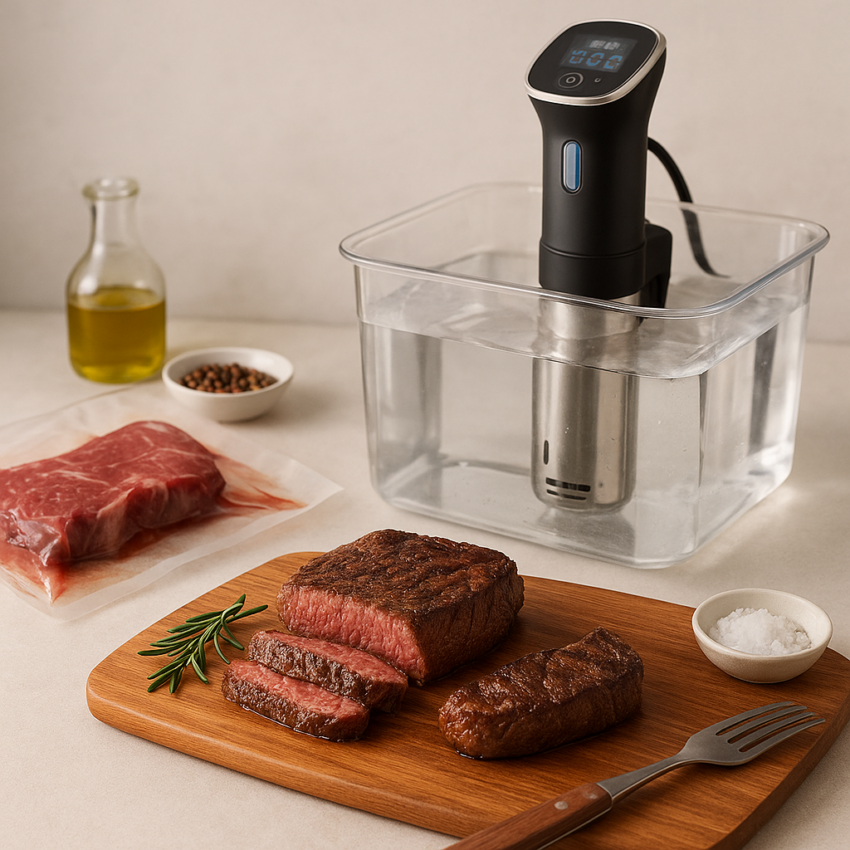
For anyone looking to elevate their culinary skills, mastering the sous vide steak technique is a must. This method offers precision cooking like no other, ensuring that your steak is perfectly cooked to the desired level of doneness every time. It has gained popularity due to its ability to consistently deliver steaks that are juicy, tender, and full of rich flavor.
Understanding the Sous Vide Steak Method
Sous vide, which means “under vacuum” in French, involves sealing food in a bag and cooking it to a very precise temperature in a water bath. This technique allows for exact control over cooking temperatures, which is crucial for proteins like steak. By using the sous vide method, you can achieve a perfectly cooked steak without the guesswork often involved in traditional cooking methods.
Why Choose Sous Vide for Steak?
The sous vide steak approach offers several advantages over conventional techniques. First, it minimizes the risk of overcooking because the water bath never exceeds the target temperature. This method also enhances the steak’s flavor and texture. When combined with a final sear, sous vide produces a delectable crust while maintaining a tender interior.
Additionally, cooking steak sous vide can be more convenient. Once the steak is in the water bath, it requires minimal attention, allowing you to focus on preparing side dishes or entertaining guests. You can even prepare steaks in advance with sous vide and finish them with a quick sear at the last moment for ultimate freshness.
Steps to Perfect Sous Vide Steak
Here’s a straightforward guide to cooking sous vide steak to perfection:
- Season and Seal: Begin by seasoning your steak with salt, pepper, and any other desired herbs or spices. Place the steak in a vacuum-sealed bag or a Ziploc bag with excess air removed.
- Heat the Water Bath: Set your sous vide device to the desired temperature. For a medium-rare steak, a common choice is 130°F (54°C).
- Cook with Precision: Submerge the sealed steak in the water bath, ensuring it is fully covered. Cook it for 1-4 hours depending on the thickness and cut. Longer cooking times result in increased tenderness.
- Sear for Flavor: Once cooked, it’s essential to sear the steak in a hot pan for 1 minute on each side, developing a caramelized crust that enhances both flavor and presentation.
While sous vide may sound technical, it’s an approachable and rewarding technique that transforms how you prepare and enjoy steak.
Benefits of Using Sous Vide
Cooking sous vide steak offers numerous benefits, ensuring professionals and home cooks alike opt for this method:
- Consistency: Every part of your steak reaches the same temperature, creating uniform doneness throughout.
- Precision: The finely tuned temperature settings help avoid overcooking.
- Flavor retention: Vacuum sealing preserves the natural flavors and juices of the steak, resulting in an extra juicy result.
- Flexibility: Meals can be prepared in advance and finished right before serving for added convenience.
For those interested in learning how other culinary techniques like sous vide can support fitness goals, you might explore how different cooking methods may help in muscle growth.
Choosing the Right Steak for Sous Vide
Whether you prefer a ribeye, sirloin, or filet mignon, sous vide steak is adaptable to any cut. Some cuts benefit more from longer cooking times to ensure tenderness. For example, tougher cuts like flank or skirt steak are ideal for sous vide, breaking down connective tissues while maintaining flavor.
Sous Vide Equipment Essentials
To get started with sous vide, you’ll need a few key tools: a precision cooker, vacuum sealer (or heavy-duty Ziploc bags), a water container, and a reliable cast iron pan for searing. As you gain experience, you may invest in additional equipment or accessories, such as sous vide cooking apps and racks to organize bags during cooking.
Common Mistakes and How to Avoid Them
While sous vide is quite forgiving, there are a few common pitfalls to avoid. One is not sealing the bag properly, which can lead to water entering and diluting flavors. Additionally, make sure the water bath is preheated before adding your steak, and avoid overcrowding the cooking container, which can interfere with water circulation.
Finally, do not skip the searing step—it adds vital texture and flavor, transforming an already tender cut into a steak that rivals any high-end restaurant offering.
Final Thoughts on Perfecting Sous Vide Steak
Whether you’re a seasoned chef or a home cooking enthusiast, sous vide steak presents an opportunity to consistently create restaurant-quality meals at home. It simplifies the cooking process while allowing you to focus on flavor and presentation. By mastering this technique, you’ll enjoy the consistent taste and succulent texture only possible through precise temperature regulation. For more information on the benefits of sous vide and other cooking techniques, you can explore resources like this Wikipedia page on sous vide.
- Always choose high-quality steaks for the best results.
- Precisely control the cooking temperature for consistent doneness.
- A finishing sear enhances flavor and presentation.
- Sous vide is a convenient method for preparing meals ahead of time.
- Be patient; precise cooking ensures superior outcomes.
FAQ
What is the ideal temperature for sous vide steak?
The ideal temperature depends on your preferred doneness. For medium-rare, aim for 130°F (54°C), ensuring a juicy and tender steak.
How long should I cook a steak using the sous vide method?
A 1-2 inch thick steak typically requires 1-4 hours. Adjust the time based on thickness and personal texture preferences, with longer times yielding increased tenderness.
Can I sous vide a frozen steak?
Yes, you can sous vide frozen steaks. Add an hour to the cooking time to allow the steak to fully reach the desired temperature.
Is it necessary to sear steaks after sous vide cooking?
Yes, searing is crucial as it develops a delicious crust and enhances flavor and visual appeal.
What equipment do I need to start sous vide cooking?
At minimum, you’ll need a precision cooker, vacuum sealer or Ziploc bags, and a container for water. For optimal results, use a heavy skillet or grill for searing.