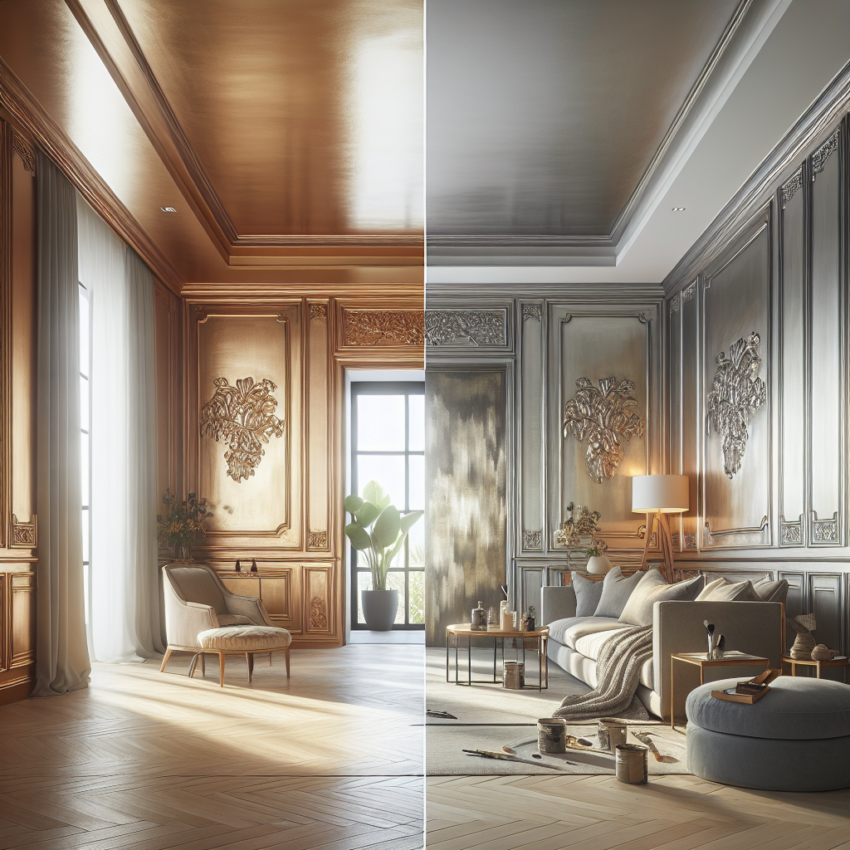
Transforming a room’s aesthetic with painting techniques can be a rewarding project, and one way to create a distinct look is by incorporating painting metallic finishes. Whether you’re looking to add a touch of glamor or create an industrial feel, metallic paints can bring a new dimension to your interiors. This article will guide you through metallic painting techniques and inspire your next home transformation.
Why Choose Painting Metallic Finishes?
Painting metallic finishes offer a unique way to add shimmer and shine to your space. These finishes catch light in captivating ways, ensuring your walls never look flat or dull. They can be used to highlight architectural details or create accent walls that draw attention. Moreover, painting metallic finishes can simulate the sheen of real metals like silver, gold, or bronze without the hefty cost.
The Art of Painting Metallic
Executing a successful painting metallic project involves understanding the types of metallic paints available. Decide whether you prefer water-based or oil-based options. Water-based paints are easier to work with and clean, making them ideal for DIY projects. On the other hand, oil-based paints provide a deeper luster but require more care during application. Always test a small area first to see how the paint appears once dried.
Types of Metallic Paints
- Metallic Flakes: These are mixed into the paint to give it a glittery appearance, making them great for accenting small areas or pieces of furniture.
- Pearlescent Paints: These create a soft, iridescent sheen that simulates the look of natural pearls.
- Hammered Metallic Paints: Ideal for achieving an industrial look, this offers a textured finish that resembles hammered metal.
Techniques for a Professional Finish
A good technique is crucial to achieving a professional finish. After selecting your paint, encourage even coat applications using a roller or brush specifically designed for textured or specialty paints. Consider using sponging or ragging techniques for added texture and depth. Additionally, using a base coat in a similar solid color can help the metallic finish look more vibrant.
Enhancing Your Interiors
Metallic paints are highly versatile and can be used on various surfaces, including walls, furniture, and accessories. For instance, create a focal point by painting a single wall with a copper metallic finish and complement it with copper accents throughout the room. Similarly, furniture pieces like cabinets or tables can be revamped with metallic touches to inject life into old items.
Painting Metallic: Dos and Don’ts
When embarking on a painting metallic project, there are specific dos and don’ts you should follow to ensure the best results:
- Do prepare the surface properly. Clean and sand the area to remove any imperfections before painting.
- Do use quality brushes and rollers specifically for metallic paints to achieve a smooth finish.
- Don’t skip the primer. A good primer can help the metallic paint adhere better and display its true color.
- Don’t overestimate the coverage. Metallic paints may require additional coats for an even appearance.
For further inspiration, explore how to decorate your home with vintage style to complement your new metallics perfectly.
Trends in Metallic Interior Design
Metallic finishes are not only elegant, but they are also highly adaptable to modern design trends. Pair them with minimalist furniture for a contemporary look or blend them with traditional elements for a classic appearance. Mixing metals is also an emerging trend where different metal hues are combined in a cohesive design.
Extending The Look Beyond Paint
To create a harmonious space, incorporate metallic elements beyond paint. Use metallic light fixtures, hardware, or even textiles with metallic threads. This consistency amplifies the impact of the metallic paint and solidifies your design theme.
Remember, whether you’re creating a bold statement or subtle elegance, painting metallic techniques can transform your space into a remarkable environment.
For more reliable information about different paint types and their uses, you can refer to this article on Wikipedia.
- Metallic paints add depth and interest to any room.
- Select the appropriate paint type for your specific project.
- Prepare surfaces thoroughly for the best results.
- Combine paints with other metallic design elements.
- Stay informed about upcoming metallic trends.
FAQs
What surfaces can metallic paint be used on?
Metallic paint can be used on various surfaces, including walls, ceilings, furniture, and decor items. Always check product labels for specific usage instructions.
Are metallic paints safe for home use?
Yes, metallic paints are typically safe for home use. Choose non-toxic varieties and ensure proper ventilation during application.
Can I mix metallic paints with regular paint?
Mixing metallic paint with regular paint can dilute the metallic effect. It’s best used alone or as an accent to enhance overall color schemes.
What tools are necessary for painting metallic?
You may need specialized brushes or rollers designed for textured or metallic paints to achieve a professional finish.
How do I maintain metallic painted surfaces?
To maintain metallic painted surfaces, gently clean with a soft, damp cloth and avoid abrasive products that may damage the finish.